
Beyond Horizons
Trailblazing Tales from Asia


Your exclusive gateway to the latest developments across transportation and space, and most importantly, how to finance it all - debt, equity, and defi! We follow and forecast where the money’s at.
Join us as we navigate through the latest roundup to uncover key developments across the region.
**Nothing in this article is intended to be or should be construed as legal or financial advice.**
Announcement
Asia Sustainable Aviation Fuel Association (ASAFA)
Singapore-Asia-Pacific
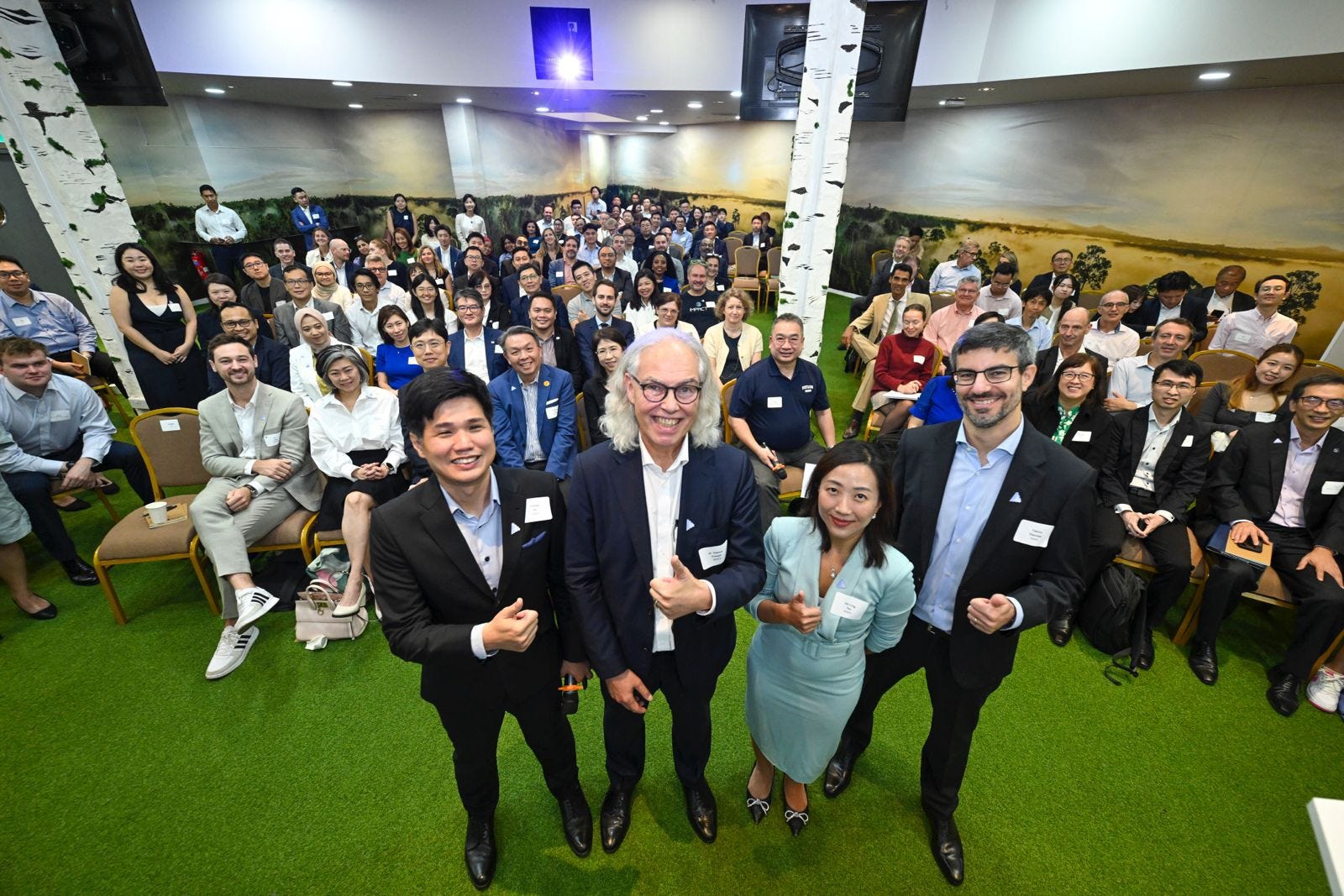
I am pleased to announce the official launch of the Asia Sustainable Aviation Fuel Association (ASAFA) in Singapore, with a mission to accelerate the adoption of Sustainable Aviation Fuel (SAF) across Asia. Supported by key industry players, including Korean Air, 1PointFive, DHL Group, and Bureau Veritas, ASAFA seeks to harmonize policies, strengthen market structures, and increase public awareness about SAF’s potential to transform aviation sustainability in Southeast Asia, South Korea, Japan, India, and China.
The association will host workshops, webinars, and field trips to foster collaboration across the SAF ecosystem and has signed an MoU with Singapore’s A*STAR to drive local innovation in SAF technology. Through partnerships with industry and government, ASAFA aims to tackle market and policy challenges, making SAF more accessible, economically viable, and supported by an informed public across Asia.
As the founder and director of governance of ASAFA, I will oversee financing, investments, and communications, ensuring the association’s efforts are effectively supported and promoted across the region.
Please reach out if you would like to learn more or explore collaboration opportunities!
Events
Fueling Tomorrow: Asia SAF Industry Series - Webinar
Join me for the Fueling Tomorrow: Asia SAF Industry Series on December 4th, for an engaging webinar featuring DHL Group, Pertamina, and General Index. This session will explore key topics such as logistics, market transparency, and regional production in the Sustainable Aviation Fuel (SAF) sector. We will discuss collaborative strategies to scale SAF adoption and create a more efficient and transparent ecosystem across Asia.
The webinar is part of the Fueling Tomorrow series, offering industry professionals critical insights into the latest SAF trends, technologies, and market developments. Attendees can expect expert presentations, case studies, and interactive discussions on production technologies, regulatory frameworks, and investment opportunities within the Asian SAF landscape.
Don't miss this chance to engage with industry leaders and gain actionable knowledge to help shape the future of SAF.
Learn more here.
Joint ICAO/ACI/IATA Symposium on Accessibility in International Civil Aviation
The International Civil Aviation Organisation (ICAO), Airports Council International (ACI), and the International Air Transport Association (IATA) will co-host the Symposium on Accessibility in International Civil Aviation from December 2-3, 2024, in Montreal, Canada. The event will gather global leaders, governments, and advocacy groups to address air travel barriers for persons with disabilities, focusing on architectural, technological, and policy solutions. Held during ICAO’s 80th anniversary, the symposium aligns with the 2024 ICAO Year of Facilitation and aims to advance cohesive, international accessibility standards in aviation.
Summary
Financing & Investments: Singapore Leads APAC in Fintech Funding in 2024; Brankas Launches Open Banking Compliance Solution at SFF 2024; State Bank of India Launches Innovation Hub at SFF 2024 in Partnership with APIX; SMBC Asia Rising Fund Invests in Three Prominent Startups in India and Southeast Asia; Standard Chartered and British International Investment Launch USD 350 Million Trade Finance Facility for Africa and South Asia; and IFC Invests $400M in Bajaj Finance to Boost Climate Finance in India
Environmental Sustainability: Digital Edge Unveils Green Finance Framework for Sustainable Data Centers; Hong Kong’s Largest Marine Park Established Near Airport to Aid Conservation; New Study Shows Potential for SAF Production in New Zealand; Ant International Launches Tool to Help Small Businesses Track Sustainability Impact; Jackson Square Aviation Teams Up with Future Energy Global to Drive SAF Production; and Global Investor Statement Urges Stronger Climate Action Ahead of COP29
Aviation: Changi Airport Group to Invest S$3 Billion in Terminal Upgrades; Auckland Airport Acquires New Zealand’s First Aircraft Recovery Kit to Boost Resilience; China Airlines Nears Decision on $4B Jet Order Amid Political Uncertainty; Singapore Airlines Q2 Profit Drops 59% to S$290 Million on Weaker Operating Performance; and Pratt & Whitney and Air New Zealand Break Ground on $150M Engine Overhaul Facility
Advanced Air Mobility: EHang Completes First Passenger Flights of Pilotless eVTOL in Thailand; Archer and Soracle Announce $500M Agreement for eVTOL Aircraft in Japan; XPeng Unveils X5 Flying Car and Advances in AI Technology at XPeng AI Technology Day; Volant Aerotech Secures Major eVTOL Orders at CIIE; Vertaxi Showcases eVTOL Innovations and Secures Key Partnerships; TCab Tech Partners with Autocraft to Launch E20 eVTOL in UAE; and Lanyi Aviation Secures Upgrades and Orders at CIIE
Artificial Intelligence: Ant International Integrates AI to Enhance Cross-Border Payments and Security; MTR Lab Invests in AI Startup Ensonic to Boost Expansion; and Yandex Plans Investment in Indonesia's AI Sector
Marine: Neptune Robotics Expands to Singapore with AI-Powered Hull Cleaning; Singapore and Norway Collaborate on Marine Electrification; Wuhu Shipyard Launches Second Methanol-Ready Orca Class Vessel for SAL Heavy Lift; K Line to Build Electric Tugboat with Kawasaki and Daizo; Yang Ming Marine Receives 1,000 Tons of B24 Biofuel for YM Witness; LR and HHI Develop Ammonia-Powered Dual-Fuel Container Ship Design; and Maersk Opens First Bonded Warehouse in Northern Vietnam
Space: World's First Wooden Satellite Launched to Explore Timber's Potential in Space Exploration; Axiom Space Explores Collaboration with India for Space Station Mission; ESA's Proba-3 Solar Eclipse Mission Departs for India Ahead of December Launch; and China's Shenzhou-18 Crew Returns with Scientific Samples After Six-Month Space Mission
Financing & Investments
Singapore
In the first nine months of 2024 (9M24), Singapore dominated fintech funding in the Asia-Pacific (APAC) region, securing 62% of total deals and raising US$745 million, according to the FinTech in ASEAN 2024: A Decade of Innovation report by UOB, PwC Singapore, and the Singapore FinTech Association (SFA). The country accounted for 53% of the total fintech funds raised in APAC, with payments, banking tech, and blockchain in financial services leading in funding. Singapore also boasts the highest number of fintech unicorns in ASEAN-6, including companies like Bolttech and Matrixport.
💡Meanwhile, Thailand moved up to second place for fintech investments in ASEAN during this period, overtaking Indonesia, which held the position last year.
Asia-Pacific
Brankas, an open finance platform provider, has unveiled a new solution at the Singapore FinTech Festival 2024 to simplify open banking compliance for financial institutions in the Asia-Pacific region. The platform integrates Brankas’ API suite with ADVANCE.AI’s eKYC technology to support banks in meeting emerging regulations, such as Indonesia's BI-SNAP guidelines and Vietnam’s evolving open banking framework. Key features include real-time identity verification, fraud detection, and risk assessments, enabling financial institutions to securely comply with regulations.
💡The platform also offers opportunities for banks to create new products like payment solutions and loyalty programs.
India
The State Bank of India (SBI) has launched the SBI Innovation Hub at the Singapore FinTech Festival, in collaboration with APIX, a global platform connecting fintechs and financial institutions. The hub aims to foster innovation by providing fintechs and startups access to over 250 of SBI's financial service APIs, a secure sandbox for testing, and opportunities to participate in challenges and hackathons.
💡The initiative is designed to accelerate SBI’s digital transformation and promote financial inclusion by enabling the development of new financial solutions for its customer base.
Asia-Pacific
SMBC Asia Rising Fund, the corporate venture capital arm of Japan’s SMBC Group, has made significant investments in three emerging startups in India and Southeast Asia. The first investment is in MODIFI, a Netherlands-based platform for B2B cross-border supply chain finance, which secured $15 million in its Series C round. MODIFI supports over 1,800 SMEs across 55+ countries, offering embedded Buy Now Pay Later solutions to help mid-sized companies grow their global presence.
💡In India, SMBC Asia Rising Fund participated in the Series B round for Easy Home Finance, a company specializing in affordable housing loans. The firm leverages AI-based underwriting and a mobile app to enable 60% of customers to complete their loan processes digitally. Additionally, the fund joined the Series D round for M2P Fintech, a leading Banking-as-a-Service platform from India that powers over 200 banks and 300+ lenders globally.
Global
Standard Chartered and British International Investment (BII) have signed a USD 350 million risk participation agreement to support trade finance for SMEs and corporations across Africa and South Asia. This renewed facility expands on an initial agreement from 2013, which has facilitated over USD 10 billion in trade across 10 countries, including Kenya, Nigeria, Bangladesh, and Pakistan.
💡The partnership aims to enhance liquidity and access to trade finance, supporting industries such as food, agriculture, healthcare, and technology.
India
The International Finance Corporation (IFC) has committed $400 million to Bajaj Finance’s $1 billion fundraising initiative, focusing on expanding access to finance for electric vehicles and energy-efficient consumer goods in India. The investment also aims to support women-owned microenterprises.
💡The partnership aims to contribute to India’s climate goals, promoting sustainable growth, energy efficiency, and financial inclusion.
Environmental Sustainability
Singapore
Digital Edge has launched its Green Finance Framework to secure funding for data center projects aligned with its ESG goals, including achieving carbon neutrality by 2030. The framework focuses on energy efficiency, renewable energy, green buildings, and sustainable water management. To qualify for green financing, projects must meet specific criteria, such as a Power Usage Effectiveness (PUE) of 1.30 or lower in cool climates. Digital Edge’s 2024 facilities already meet these standards.
💡The framework has received an SQS2 sustainability score from Moody’s and adheres to international green finance principles.
Hong Kong
The new North Lantau Marine Park (NLMP), spanning 2,400 hectares near Hong Kong International Airport (HKG), has been established as part of environmental measures for the airport’s Three-Runway System (3RS) expansion. The park, connecting with other protected areas, enhances conservation for endangered Chinese White Dolphins (CWDs) and local fisheries. Linking with China’s Pearl River Estuary reserve, NLMP aims to boost cross-border conservation efforts.
💡Established with input from Airport Authority Hong Kong (AAHK) since 2016, NLMP includes artificial reefs and fish restocking to support long-term marine biodiversity.
New Zealand
Air New Zealand and LanzaJet have unveiled the preliminary results of a study exploring the potential for producing SAF from locally sourced woody waste residues and low-value wood products. Funded by Air New Zealand and the New Zealand Government, the feasibility study, conducted with Scion, Z Energy, and WoodBeca, found that locally produced SAF could meet up to 25% of the nation’s aviation fuel demand.
The study highlights significant economic and environmental benefits, including the potential to generate hundreds of millions of dollars annually and create new regional jobs. However, substantial investment in infrastructure will be required to scale up production.
💡The next phase of the study will explore the use of municipal solid waste as an additional feedstock. With the right regulatory support and investment, the study's partners believe New Zealand could quickly establish a sustainable SAF industry.
Singapore-Asia
Singapore’s Ant International is launching the MSME Sustainability Impact Scorecard (MSME S-Card) to help small businesses in Asia track and improve their environmental and social impact. The tool, part of Ant’s Programme Sirius, automates the collection of ESG data, helping businesses validate their sustainability efforts and attract investment. It aims to address challenges like limited resources and access to green financing.
💡The first pilot will be with GCash in the Philippines, customized for local MSMEs, and is set to launch in 2025. Programme Sirius, launched in 2024, supports MSMEs in aligning with global sustainability standards, including the UN’s Sustainable Development Goals.
Global
Jackson Square Aviation (JSA), part of Japan’s Mitsubishi HC Capital Inc., has partnered with Future Energy Global (FEG) to accelerate SAF production. The collaboration aggregates SAF demand from multiple clients to secure bulk purchases at favorable prices, offering smaller airlines and corporate buyers access to affordable fuel. JSA’s customers will benefit from pre-purchased SAF and FEG’s extensive network, boosting demand and production.
💡The partnership supports the aviation industry’s goal of achieving net-zero emissions by 2050, with JSA’s fleet of 277 aircraft focused on sustainability. FEG also manages SAF procurement complexities, ensuring a sustainable and traceable supply chain.
Global
A coalition of 650 investors managing $33 trillion in assets has signed the 2024 Global Investor Statement, urging governments to raise their climate ambitions. The statement, coordinated by the Investor Agenda, calls for more robust Nationally Determined Contributions (NDCs) and policies to accelerate the transition to a net-zero economy.
💡The statement will be presented at COP29 in Baku, Azerbaijan, on November 15, highlighting the critical need for government action to mobilize private investment in climate solutions.
Aviation
Singapore
Changi Airport Group (CAG) will invest S$3 billion over the next six years to upgrade Terminals 1 to 4, improving services like baggage handling, check-in, immigration, and Skytrain connections. These upgrades aim to enhance the passenger experience and ensure the airport remains competitive until Terminal 5 opens in the mid-2030s.
Key upgrades include the rejuvenation of the Skytrain system, expansions at Terminal 3 and 4, and enhanced airside infrastructure. CAG is also focusing on worker safety and productivity, adopting automation to improve operations.
💡To fund the improvements, CAG will gradually raise airport charges between 2025 and 2030. Passenger fees are expected to rise by about 1% for economy class tickets. Airlines will see increases in landing, parking, and aerobridge charges, with a 50% rebate for the first six months.
New Zealand
Auckland Airport has invested in New Zealand’s first disabled aircraft recovery kit (DAR), valued at $4 million, designed to lift and tow large aircraft in case of an incident on the runway. Previously, Auckland Airport relied on recovery kits from Sydney or Singapore, risking extended closures that could impact New Zealand’s travel and trade.
💡Manufactured in the Netherlands, the DAR includes high-capacity airbags, lifting beams, and a recovery trailer. Nineteen airport staff trained at the Resqtec facility in the Czech Republic, setting a record for swift recovery in Boeing 737 training. The specialized Disabled Aircraft Recovery Team (DART) will maintain readiness through ongoing training using a decommissioned 737.
Taiwan
Taiwan’s largest carrier, China Airlines, is close to finalizing a multi-billion dollar order for long-haul passenger jets, expected to split between Airbus and Boeing, reports Reuters. The airline is considering the Boeing 777X and Airbus A350-1000 to replace its aging fleet of Boeing 777-300ERs and accommodate future growth.
💡Industry sources suggest China Airlines could order up to 20 jets, potentially worth nearly US$4 billion, with the decision also influenced by the outcome of the US presidential election. The airline is also evaluating freighter options, with the political climate playing a role in the final choice. The decision is pending approval from the airline’s board.
Singapore
Singapore Airlines (SIA) reported a significant 59% decline in its net profit for the second quarter of FY2025, falling to S$290 million from S$707 million a year ago. Despite a 2% increase in revenue to S$4.8 billion, the airline’s performance was impacted by weaker operating results, lower net interest income, and losses on the disposal of aircraft and spares. These were partly offset by higher profits from associated companies and lower tax expenses.
For the first half of the financial year, SIA's net profit dropped by 48.5% to S$742 million, with revenue rising 3.7% to S$9.5 billion. The group saw strong passenger demand, carrying 19.2 million passengers, a 10.8% year-on-year increase. However, passenger load factors declined slightly as capacity growth outpaced traffic growth. Meanwhile, air freight volumes increased significantly, driven by e-commerce and ongoing sea freight disruptions.
💡SIA’s operating fleet now consists of 205 aircraft, with 84 more on order. The airline also announced a S$1.1 billion investment to retrofit its Airbus A350 fleet with new cabin products, slated for completion by 2030. Looking ahead, the airline expects strong demand for both air travel and freight but anticipates a competitive operating environment.
New Zealand
Pratt & Whitney and Air New Zealand have broken ground on a $150 million expansion of the Christchurch Engine Centre, aimed at boosting engine maintenance capacity. The 14,000 square-meter facility will support up to 140 GTF engine overhauls annually by 2032, with the first expected in 2026.
💡The project will create 200 new jobs and strengthen New Zealand’s aviation capabilities.
Advanced Air Mobility
Thailand-China
EHang's autonomous EH216-S eVTOL aircraft successfully completed its debut passenger flights in Thailand at the Queen Sirikit National Convention Center on November 8, 2024. The Civil Aviation Authority of Thailand (CAAT) authorized the flights as part of the Thailand Drone Exhibition & Symposium 2024. The EH216-S showcased its potential to ease urban traffic and enhance tourism by offering faster travel between Thailand's islands. EHang plans additional test flights and aims to begin commercial operations in Phuket and Koh Samui by 2025, further advancing Thailand’s urban air mobility sector.
💡This marks the 18th country where the air taxi has been demonstrated.
USA-Japan
Archer Aviation has partnered with Soracle Corporation, a joint venture between Japan Airlines and Sumitomo Corporation, to bring electric air mobility services to Japan. Soracle has secured the right to order up to 100 Midnight eVTOL aircraft from Archer, totaling around $500 million. The aircraft will be used to provide air taxi services in cities like Tokyo, Osaka, and Okinawa, addressing traffic and geographic challenges.
💡The companies plan to work with the Japanese Civil Aviation Bureau (JCAB) to obtain the necessary certifications, with plans to launch commercial AAM services ahead of the 2025 World Expo. A public flight demonstration is expected to raise awareness and engage potential customers.
China
At XPeng AI Technology Day on November 6, 2024, XPeng AeroHT revealed its X5 tilt-rotor flying car, completing its low-altitude travel lineup. The six-rotor X5 is designed for intercity and city-to-airport travel, with a top speed of 360 km/h and a range of 500 km. It’s slated for mass production within five years. The X5 follows XPeng’s three-phase strategy for urban air mobility, which includes the previously launched "Land Aircraft Carrier" and a future integrated land-and-air flying car.
💡XPeng also introduced its Turing AI chip and Canghai Platform, focusing on autonomous driving and AI. The Turing chip, developed in-house, supports advanced AI systems, enabling XPeng’s vehicles and flying cars to handle complex tasks autonomously. XPeng aims for a Level 3+ autonomous driving system within 18 months and to expand into 60 countries by 2025. Furthermore, the company showcased its Kunpeng Super Electric System, which combines electric and extended range technologies, enhancing vehicle performance and efficiency.
China
Volant Aerotech has secured over 165 orders for its VE25-100 eVTOL aircraft, valued at more than 3.5 billion RMB, during the 7th China International Import Expo in Shanghai. Key agreements include partnerships with China Southern Airlines, Deer Jet, China General Aviation, and China Feilong.
💡Volant has also formed financial collaborations with major institutions, including Agricultural Bank Leasing and China Southern Airlines International Financing, to support its eVTOL fleet’s development and deployment across various aviation sectors, such as passenger transport, business aviation, and low-altitude services.
China
At the China International Import Expo, Vertaxi unveiled its M1 air taxi prototype, along with the E40H and E5 drones. The company secured a procurement agreement for 100 M1 aircraft with SPDB Financial Leasing, valued at over 1 billion RMB.
💡Vertaxi also formed a partnership with Shenneng Property Insurance, focusing on applications in logistics, emergency rescue, and urban mobility, aiming to expand its footprint in the eVTOL market.
China
TCab Tech has partnered with UAE-based Autocraft to bring its E20 eVTOL aircraft to the UAE market. The collaboration will support air taxi services, low-altitude tourism, and urban air mobility in line with the UAE's 2030 Smart Autonomous Transport Strategy.
💡The partnership also marks TCab’s expansion into international markets, complementing its efforts to develop an assembly plant in Wuhu City, China.
China
At the 7th China International Import Expo (CIIE), Lanyi Aviation received upgraded flight control systems from Aviage Systems for its LE200 eVTOL, enhancing fault detection and redundancy. The company also secured an order from Sichuan Xingyun Aviation Services for 60 eVTOLs, supporting low-altitude tourism and aircraft management.
💡These developments advance Lanyi’s expansion, with the LE200 and LEU100 models set for release in 2026 and 2028.
Artificial Intelligence
Singapore-Global
Ant International is ramping up its use of Artificial Intelligence (AI) to enhance cross-border transactions, benefiting merchants across 200+ global markets. The company has introduced an AI-powered currency exchange model that predicts exchange rates on an hourly basis, helping merchants reduce transaction costs. Additionally, Ant International has developed an advanced anti-deepfake e-KYC tool to combat the rise of AI-driven cyberattacks, boasting a success rate of over 99%.
💡At the Singapore FinTech Festival, Ant also announced a new partnership with OCBC for 24/7 real-time transactions between Singapore and Malaysia, and an expanded collaboration with PayPay to provide seamless payment solutions for foreign tourists in Japan.
Hong Kong-Beijing
MTR Lab, the venture capital arm of Hong Kong's MTR Corp, has made its first investment in a mainland Chinese company, Ensonic. The Beijing-based startup specializes in AI-powered acoustic-detection systems for equipment quality control and maintenance.
💡MTR Lab, which targets global startups in various sectors, seeks to strengthen its portfolio with investments in technologies relevant to its parent company’s operations.
Russia-Indonesia
Russia's internet giant Yandex plans to invest in Indonesia's AI sector, according to Indonesia's Communications Minister Meutya Hafid, as reported by Reuters. During a meeting with Alexander Popovskiy of Yandex, the company expressed intentions to expand its search engine platform in the country. While the details of the investment, including its size and timeline, remain unclear, the move reflects growing interest in Indonesia's tech ecosystem.
💡Yandex, known for its AI expertise, faces challenges due to restrictions on technology access amid geopolitical tensions.
Marine
Singapore
Neptune Robotics has launched its AI-driven hull cleaning services in Singapore, marking the first large-scale robotic cleaning operation along the China-Singapore shipping route. The company now operates a fleet of six underwater robots capable of cleaning in extreme conditions, offering an eco-friendly solution to biofouling.
💡With the ability to clean 24/7 and remove over 95% of biofouling, Neptune’s technology improves vessel performance and reduces fuel consumption and emissions. The company aims to clean 800 vessels in Singapore within the next year. Led by maritime veteran Johnson Teng, Neptune’s expansion supports its commitment to sustainable, efficient shipping operations.
Singapore-Norway
Singapore and Norway has inked two agreements to advance sustainable marine electrification. A Letter of Intent (LoI) between Norwegian companies Evoy and Pascal Technologies and Singapore’s Lita Ocean and SeaTech Solutions aims to develop a fully electric passenger harbor craft for Singapore, integrating advanced propulsion and energy-efficient technologies.
💡The second agreement, a Memorandum of Understanding (MoU) between Yinson GreenTech and Evoy, focuses on electrifying vessels in Asia by converting internal combustion engine vessels to electric power and developing new electric vessels, promoting a greener maritime industry.
China
Wuhu Shipyard has launched the Frida, the second of five planned Orca class 14,600 dwt multipurpose vessels for Germany’s SAL Heavy Lift. The Frida is part of an order made in 2022 by the Hamburg-based carrier, a member of the JSI Alliance, in cooperation with Jumbo Shipping. The Orca class vessels, designed to meet the demands of heavy lift shipping while reducing carbon emissions, feature hybrid propulsion systems, 800t electric cranes, and shore power solutions for connecting to local grids. The vessels are also equipped with Wärtsilä’s methanol-compatible engines.
💡The Frida is scheduled for delivery in January 2025, following the earlier launch of Elise. The first two Orca class vessels will be used for transporting offshore wind turbine components for Siemens Gamesa Renewable Energy, with the remaining units to be delivered in 2025.
Japan
K Line has partnered with Kawasaki Heavy Industries (KHI) and Daizo Corporation to develop an electric tugboat with a 3.2 MWh battery powered by green electricity. The vessel aims to cut fuel consumption and reduce carbon emissions by 60% compared to traditional tugboats using heavy fuel oil. Featuring a newly designed hull and IoT-driven power management for energy efficiency, it will operate at Yokohama and Kawasaki ports.
💡Scheduled for delivery in May 2027, the project is part of Japan's initiative to enhance energy efficiency and promote decarbonization in the coastal shipping industry.
Asia
Hong Kong-based Chimbusco Pan Nation Petro-Chemical (CPN) delivered 1,000 metric tons of B24 marine biofuel to Taiwan’s Yang Ming Marine Transport Corporation for its 145,400 dwt containership YM Witness. The bunkering took place in Singapore in mid-October.
💡This follows Yang Ming’s recent commitment to sustainable fuel, starting in March 2024 with its first vessel bunkered with biofuel. The B24 biofuel, made from used cooking oil methyl ester and marine fuel oil, is ISCC-EU certified and is said to reduce CO2 emissions by up to 84%.
South Korea
Lloyd’s Register (LR) and HD Hyundai Heavy Industries (HHI) have signed an Approval in Principle (AiP) for a 15,300 TEU ammonia-powered dual-fuel container ship, as part of a joint development project (JDP). The vessel, a 365-meter ultra-large container ship (ULCS), features a twin skeg design and small-bore engines currently available on the market, with ammonia fuel tanks placed ahead of the engine room for enhanced safety and crew habitability.
💡The design addresses challenges with ammonia adoption, especially the lack of large ammonia-powered dual-fuel engines for ULCSs. The project will undergo a full safety review, including assessments of ammonia fuel tank construction using low-temperature steel, the ship's structural integrity against sloshing loads, and the compatibility of the fuel gas supply system. LR is providing technical advice to ensure the design meets safety and operational standards for ammonia as a marine fuel.
Vietnam
A.P. Moller – Maersk has launched its first bonded warehouse in Vietnam at SLP Park, Nam Dinh Vu IP, Hai Phong province. Operated by Maersk Contract Logistics, the facility is strategically located near Hai Phong seaport, offering improved storage solutions and enhanced supply chain efficiency for businesses in the region.
💡The warehouse provides customers with better inventory control, duty-free import/export flexibility, and faster delivery times while ensuring compliance with customs regulations. It features advanced technology, including a modern racking system, automated inventory control, and energy-efficient systems like skylight panels and LEDs. Amazon Vietnam, a cross-border e-commerce provider, will be the first customer to operate from the facility, utilizing Maersk’s services for customs, fulfillment, and transportation.
Space
Japan
The world's first wooden satellite, LignoSat, was launched into space on Tuesday as part of a test to explore the use of timber in lunar and Mars exploration. Developed by Kyoto University and Sumitomo Forestry, LignoSat will be sent to the International Space Station on a SpaceX mission before being released into orbit. The satellite, made from wood certified by NASA, aims to demonstrate the potential of using sustainable timber in space, with a long-term goal of building wooden habitats on the Moon and Mars.
💡Unlike metal satellites, wooden satellites would burn up with minimal pollution upon re-entry, offering environmental benefits. Researchers hope to pitch the idea to SpaceX if the test is successful.
USA-India
According to Reuters, Axiom Space, a U.S.-based startup building a private space station, is in talks with India’s ISRO and private launch companies to explore using Indian launch vehicles for its missions. This move aligns with the recent U.S.-India Space Flight Agreement and aims to diversify Axiom's supply chain.
💡The company is also discussing potential partnerships with European nations for its space station supply needs.
Europe-India
ESA's Proba-3 mission, designed to create a solar eclipse in space, has left Europe for India ahead of its December 4 launch. The mission features two spacecraft that will precisely align to block the Sun, offering continuous views of the Sun's corona. Transported from Belgium to India, the spacecraft will be launched by ISRO's PSLV-XL rocket. Proba-3’s instruments will provide vital data for space weather and climate studies, with mission operations managed from ESA’s center in Belgium.
💡This is ESA’s first launch from India since 2001.
China
Space experts in China have started analyzing the scientific samples returned by the Shenzhou-18 crew, which landed in Inner Mongolia on November 4. The crew, consisting of astronauts Ye Guangfu, Li Cong, and Li Guangsu, spent six months aboard China's Tiangong space station, conducting over 90 experiments across various fields, including material science, life sciences, medicine, and microgravity physics.
💡The astronauts brought back 55 categories of samples, weighing a total of 34.6 kilograms (75 pounds). These samples span 28 subjects, ranging from space life sciences to microgravity combustion research. On Monday, life science samples from 24 categories were transported to the Space Application Center of the Chinese Academy of Sciences in Beijing for further study.
**Nothing in this article is intended to be or should be construed as legal or financial advice.**