
Beyond Horizons
Trailblazing Tales from Asia


Your exclusive gateway to the latest developments across transportation and space, and most importantly, how to finance it all - debt, equity, and defi! We follow and forecast where the money’s at.
Join us as we navigate through the latest roundup to uncover key developments across the region.
**Nothing in this article is intended to be or should be construed as legal or financial advice.**
Read
Rocky Mountain Institute (RMI)
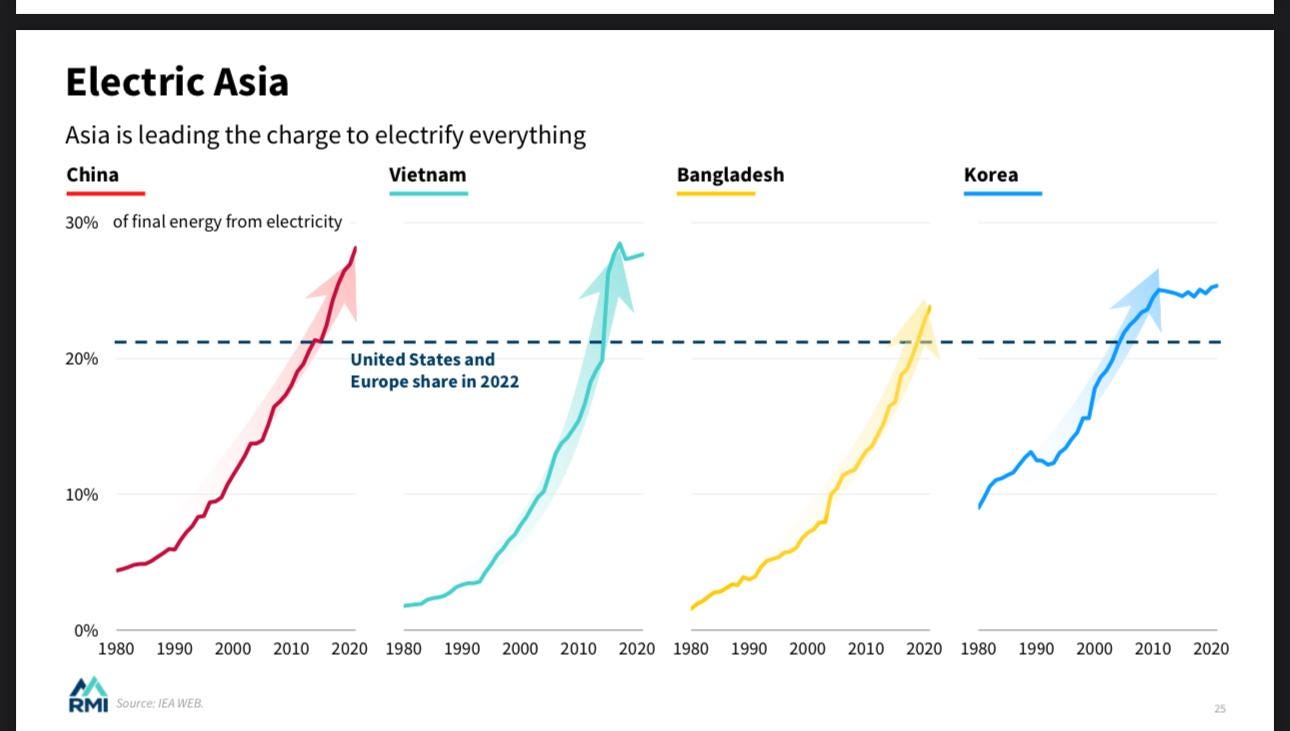
Rocky Mountain Institute (RMI) has published its third annual energy transition report titled "Cleantech Revolution," highlighting profound disruptions in the energy system driven by renewables, electrification, and efficiency. The report underscores exponential declines in cleantech costs, substantial investment increases, and significant growth in solar energy and efficiency measures over the past decade.
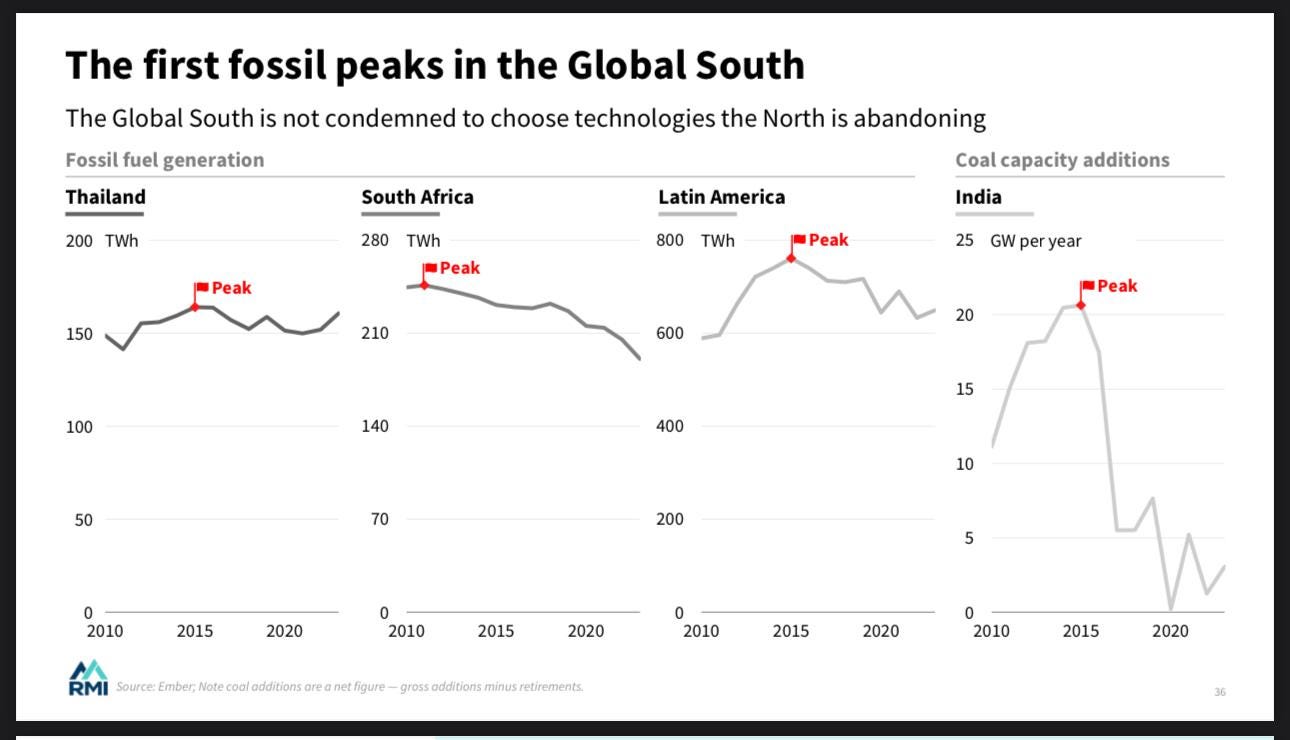
China leads global cleantech growth, with accelerating trends observed across OECD countries and the Global South. Meanwhile, the fossil fuel sector faces multiple declines across electricity generation, final energy use, and transportation, signaling a shift towards cleantech dominance.
The report emphasizes the feasibility of achieving Paris Agreement goals and urges immediate action to accelerate renewable deployment, electrification, and efficiency improvements during this pivotal decade of transformation.
MarketsandMarkets
According to a new report by MarketsandMarkets, the aviation cloud market is estimated to reach USD 12.9 billion by 2029 from USD 6.1 billion in 2024, with a CAGR of 16.1%. The growth is driven by the digital transformation accelerated by the pandemic, prompting aviation stakeholders to adopt cloud solutions for competitive advantages.
Platform as a Service (PaaS) is expected to grow notably, facilitating streamlined application development. The public cloud segment is also projected to expand robustly due to its scalability and cost-efficiency. Airports, leveraging cloud technologies for operational efficiencies, are forecasted to grow substantially.
Asia Pacific leads in growth, fueled by economic expansion, digitalization, and infrastructure investments.
Key players include Lufthansa Group, Collins Aerospace, Adobe, Salesforce, and Oracle, known for their comprehensive connectivity solutions and global market presence.
Summary
Blockchain Technology: VMIC Partners with IX Swap to Tokenize Aviation Assets and Ripple Launches Japan and Korea Fund to Boost XRP Ledger Innovation in Asia-Pacific
Cryptocurrency: IKAR Holdings and Unify Platform Launch World's First Crypto Space Bank
Exchange Traded Funds: Australia Approves First Bitcoin ETF Listing on ASX
Aviation: Australian Government Funds $13.5 Million for Emerging Aviation Technologies and Korean Air Selects Air Incheon for Asiana Airlines Cargo Unit Acquisition
Environmental Sustainability: Chevron Lummus Global to Lead ISOTERRA SAF Project in China; EGAT and IHI Corp. Collaborate on Biomass Co-Firing at Mae Moh Power; Kintetsu World Express Joins Forces with IAG Cargo to Expand SAF Use; BAFS and CAO Form Partnership to Advance SAF Development; and MHI and EGAT Partner on Hydrogen Co-Firing for Clean Energy Transition in Thailand
Electric Vehicles: EU to Impose Additional Tariffs on Chinese EVs Amid Growing Market Competition
Urban Air Mobility: Moviation Launches Vonaer, Korea's First UAM Service and Airways International and Tāwhaki Forge Aerospace Innovation Partnership
Advanced Air Mobility: Lilium Establishes Asia-Pacific Headquarters in Shenzhen, China; Volant Aerotech Secures Hundred Million Yuan in A+ Financing Round; and EHang Conducts First Autonomous Air Taxi Flight in Mecca
Space: NTU Develops Singapore's First Low Orbit Satellite for Groundbreaking Space Research; Astroscale's Space Junk Removal IPO Surges 51% in Tokyo Debut; and Orbit Connect India Secures Satellite Operation Approval for Fiber Internet Expansion
Blockchain Technology
South Korea-Singapore
Korean Aviation leasing and finance firm VMIC has signed a Memorandum of Understanding (MOU) with IX Swap, a real-world asset (RWA) platform. The partnership aims to issue and distribute RWA tokens backed by aviation assets such as aircraft and engines to global investors. IX Swap, associated with Singapore-based InvestaX, operates a decentralized exchange (DEX) for security and RWA tokens using blockchain technology.
The collaboration intends to democratize access to aviation investments, traditionally limited to institutional investors, by leveraging blockchain-based security token offerings (STOs).
💡VMIC seeks to address funding challenges in aviation infrastructure expansion through enhanced liquidity and global investor participation facilitated by this initiative.
South Korea-Japan
Blockchain firm Ripple has launched a Japan and Korea fund aimed at advancing innovation on the XRP Ledger in the Asia-Pacific region. The initiative, part of Ripple's commitment involving 1 billion XRP, will support corporate partnerships, developer grants, startup investments, and community growth.
Ripple's expansion efforts in Asia-Pacific include partnerships with HashKey DX for supply chain finance solutions and the establishment of SBI Ripple Asia in 2016 with SBI Holdings. The company plans to utilize the XRP Ledger for issuing NFTs at World Expo 2025 in Osaka and has secured a full operating license in Singapore, its regional hub since 2017.
💡Ripple is preparing to launch a U.S. dollar stablecoin, marking significant developments in its global strategy and product offerings.
Cryptocurrency
Global
IKAR Holdings from Britain and Unify Platform from Switzerland and Japan have jointly announced the launch of the world's first “Crypto Space Bank.” The project aims to store and facilitate transactions of cryptocurrencies using a compact cube satellite deployed in outer space.
💡 The "Crypto Space Bank" initiative aims to redefine the storage, transaction, and security standards for digital assets globally.
Exchange Traded Funds
Australia
Australia's main stock exchange, ASX, has approved the listing of the VanEck Bitcoin Exchange Traded Funds (ETF),marking the country's first such ETF. The development follows successful launches of Bitcoin ETFs in the US and spot ETFs in Hong Kong.
💡The ETF will debut amidst significant global interest, with US Bitcoin ETFs amassing USD 58 billion in assets this year alone. Local players like BetaShares and DigitalX are also preparing to list Bitcoin ETFs on ASX, anticipating increased investor interest fueled by the cryptocurrency's recent price surge.
Aviation
Australia
The Australian Federal Government has allocated $13.5 million in grants to 12 projects under Round 2 of the Emerging Aviation Technology Partnerships program. Recipients include AMSL Aero, Electro.Aero, Jabiru, Stralis, and Wedgetail, among others.
The projects focus on advancing technologies such as drones, eVTOLs, and hydrogen and battery-electric aviation systems. Objectives include enhancing regional connectivity, supporting agriculture with digital technology, and improving access to healthcare and goods in remote communities, including Indigenous areas.
💡The program aims to foster innovation in aviation technology to benefit regional, rural, and remote Australia.
South Korea
Korean Air Lines Co., South Korea's leading full-service carrier, has selected Air Incheon as the preferred bidder to acquire Asiana Airlines Inc.’s cargo unit for approximately 500 billion won ($361.8 million). The decision follows the European Commission's requirement for Korean Air to divest the cargo unit as part of its merger approval with Asiana.
💡The sale is expected to be finalized by October, with Air Incheon chosen over other final bidders including low-cost carriers Air Premia Inc. and Eastar Jet Co.
Environmental Sustainability
China
Chevron Lummus Global LLC's ISOTERRA technology has been selected for a new sustainable aviation fuel (SAF) project in China. CLG will supply the technology license, engineering services, and proprietary equipment and catalysts for the facility.
💡The facility, processing 400 KTA of various lipid feedstocks like plant oils and animal fats, aims to produce SAF and renewable diesel, supporting China's carbon reduction goals for 2030 and beyond.
Thailand-Japan
The Electricity Generating Authority of Thailand (EGAT) has entered into a memorandum of understanding (MoU) with Japan-based IHI Corporation to explore the possibility of co-firing biomass with coal at the Mae Moh Power Plant. The collaboration involves exchanging information and technologies to establish wood pellet production plants.
💡EGAT aims to advance its power plants toward achieving Carbon Neutrality by 2050 and Net Zero Emissions by 2065 through this partnership.
South Korea
Kintetsu World Express, Inc. (KWE) has partnered with IAG Cargo to increase the use of SAF. KWE will purchase 640,000 litres of SAF environmental attributes, certified by ISCC and derived from used cooking oil and food waste.
💡The initiative aims to significantly reduce Scope 3 emissions in KWE's supply chain, achieving over 90% lower lifecycle emissions compared to traditional jet fuel.
Japan
Marubeni, a Japanese trading house, has started supplying All Nippon Airways (ANA) with SAF produced in South Korea using a cost-effective co-processing method. The SAF, sourced from HD Hyundai Oilbank and distributed via Marubeni's unit in Chiba prefecture to Narita Airport through a pipeline, reduces carbon emissions by up to 80% compared to conventional aviation fuel. The approach allows SAF production at existing refineries without dedicated plants, addressing cost and output challenges.
💡The move marks a significant step in Japan's adoption of SAF, aligning with global aviation industry goals for net-zero carbon emissions by 2050.
Thailand-Singapore
Bangkok Aviation Fuel Services Public Company Limited (BAFS) and China Aviation Oil (Singapore) Corporation Ltd (CAO) have signed an MOU to collaborate on enhancing technology and promoting SAF development.
💡The partnership aims to share knowledge, expertise, and resources to advance aviation fuel supply services and develop sustainable aviation fuel technologies.
Thailand-Japan
Mitsubishi Heavy Industries, Ltd. (MHI) and Thailand's EGAT have signed an MoU to research hydrogen co-firing technologies for gas turbine power generation in Thailand. The collaboration, initiated at the 6th Japan-Thailand Energy Policy Dialogue, aims to convert thermal power plants to cleaner fuels in support of Thailand's carbon neutrality goals by 2050. The partnership will begin with a pilot project at an EGAT power plant, targeting a 20% hydrogen co-firing ratio by 2025.
💡Building on a previous MoU, the agreement underscores ongoing efforts to advance clean fuel and hydrogen technologies, aligning with EGAT's strategic hydrogen supply chain development plan.
Electric Vehicles
EU-China
The European Commission will impose additional tariffs of up to 38.1% on imported Chinese electric cars starting in July. The move aims to counteract what Brussels sees as excessive subsidies benefiting Chinese automakers. The tariffs, ranging from 17.4% to 38.1%, will be added to the standard 10% car duty. The decision follows a similar move by the United States, which recently increased tariffs on Chinese electric vehicles to 100%.
💡European automakers are facing increased competition from cheaper Chinese electric vehicles, which have seen their market share in the EU rise sharply from less than 1% in 2019 to 8% currently, with potential growth to 15% by 2025. The Chinese models are typically priced around 20% lower than European-made electric vehicles.
Urban Air Mobility
South Korea
Moviation, a Seoul-based firm, has launched Korea's first urban aerial mobility (UAM) service named Vonaer, using chartered helicopters to offer efficient transportation across Seoul and beyond. The service, accessible via a smartphone app, operates between designated Von Ports, reducing travel times significantly compared to road transport.
Moviation aims to establish a foundation for the UAM market in Korea, starting with existing helicopter infrastructure before advancing to more advanced carriers.
💡Despite regulatory challenges and limited initial infrastructure, the firm plans to expand its service network and reduce costs to enhance accessibility and competitiveness in the evolving UAM industry.
New Zealand
Airways International and Tāwhaki Joint Venture have formed a collaboration, focusing on integrating new and existing aerospace technologies safely into New Zealand’s airspace system.
Tāwhaki will deploy Airways International’s AirShare uncrewed traffic management (UTM) system at their National Aerospace Centre at Kaitorete, aiming to enhance airspace safety and efficiency. The collaboration aims to establish initiatives like flight corridors to explore new operational concepts and support the integration of new aircraft types.
💡The partnership is expected to provide valuable insights for policymakers, regulators, and standards development organizations globally.
Advanced Air Mobility
Germany-China
German eVTOL manufacturer Lilium has signed a collaboration agreement with the Bao’an District of Shenzhen, China,to establish its Asia-Pacific headquarters through a new entity called Powerful Wing. The initiative builds on previous agreements with Heli-Eastern and aims to expand Lilium's presence in China.
The headquarters, set to open within Bao’an’s Low Altitude Economy Industry Public Service Center, marks the first regional office for a European eVTOL manufacturer in the district.
💡The partnership focuses on deploying Lilium Jets across China's Greater Bay Area and surrounding APAC region, emphasizing regional sales, services, and regulatory engagement.
China
Volant Aerotech, established in June 2021, has concluded its sixth financing round with a hundred million yuan, marked as its third such round since 2024. Led by QF Capital and involving Nanshan Zhanxin Investment, Dunhong Assets, and Micro Light Venture Capital, this funding round was advised by Gengxin Capital.
💡The investment will support VE25 X1 verification aircraft testing, AC101 product aircraft development, manufacturing, and expansion into commercial passenger transportation markets.
China-Saudi Arabia
Chinese eVTOL manufacturer EHang has successfully conducted the first autonomous air taxi flight of its EH216-S eVTOL aircraft in Mecca, Saudi Arabia. The flight was carried out in collaboration with Front End Limited Company.
💡Supported by Saudi Arabia's local authorities, including the General Authority of Civil Aviation and several ministries, the initiative aims to enhance the efficiency and sustainability of the annual Hajj pilgrimage through advanced pilotless eVTOL technology.
Australia
Skyportz, an Australian developer, presented new riverfront vertiport designs for Brisbane River at the Advanced Air Mobility summit. The designs aim to make Brisbane a leader in Australia's air taxi adoption, influenced by the upcoming 2032 Olympic Games.
💡Skyportz worked with Contreras Earl Architecture, as well as UK firms Pascall+Watson and Minmud, on the project. They have also collaborated with Dr. Abdulghani Mohamed to study wind patterns and turbulence in potential urban vertiport locations.
Space
Singapore
Nanyang Technological University (NTU) has developed Singapore's first satellite designed to operate at an unusually low orbit, named the Extremely Low Earth Imaging Technology Explorer (Elite).
Scheduled for launch in mid-2025, Elite will orbit just 250km above Earth, significantly closer than most satellites which typically orbit between 500km to 800km. As a research satellite, Elite will spend approximately 1½ years in space testing novel technologies developed locally.
💡NTU's 14th satellite, Elite is also its largest and most complex to date, and its launch is timed during a period of heightened solar activity expected between 2024 and 2025.
Japan
Astroscale Holdings, a Japanese startup focused on space junk removal, saw its shares surge 51% in their debut on Tokyo's growth market. The initial public offering priced at 850 yen per share, valuing the company at 145 billion yen ($934 million).
Founded by Nobu Okada in 2013, Astroscale has garnered government support in Japan, the US, and the UK for its technology aimed at clearing orbital debris and extending satellite lifespans.
💡Despite operating at a 9.2-billion-yen loss in the fiscal year ending April 2023, Astroscale's IPO was oversubscribed, reflecting strong investor interest in Japan's burgeoning space sector.
India
Orbit Connect India, a joint venture between Jio Platforms and SES, has received permission from India’s space agency to operate satellites over the country for its gigabit fiber internet service. Competing with global providers like Starlink and Amazon’s Kuiper, Orbit Connect aims to bring internet connectivity to remote areas in India.
💡While Starlink awaits final approval from India’s Home Affairs Ministry, Amazon's Kuiper is yet to begin the application process; other players like Inmarsat and OneWeb are also progressing towards satellite operations in India pending further approvals.
**Nothing in this article is intended to be or should be construed as legal or financial advice.**