
Asset Finance & Alternatives in APAC & Beyond
Aviation Finance, Alt Asset Finance in APAC & Beyond

Your exclusive gateway to the latest developments across transportation and space, and most importantly, how to finance it all - debt, equity, and defi! We follow and forecast where the money’s at.
Join us as we navigate through the latest roundup to uncover key developments across the region.

**Nothing in this article is intended to be or should be construed as legal or financial advice.**
Summary
Financing & Investments: AirTrunk Commits $3B To Johor Data Center Expansion; Malaysia Launches First Tokenized Sukuk Issuance; DPS Partners Alibaba Affiliate For $1.1B AI Data Center In Melaka; Philippines And Singapore Seal First Carbon Credit Deal; MAS Paves Way For Dual Listings With SGX–Nasdaq Framework; TechX Ventures Signs Global Security AI Partnerships At MTX 2026; Featherless.ai Raises $20M To Scale Open-Source AI Infrastructure; Cube Secures $3.7M To Expand AI Commerce Data Platform; and Vietnam Approves $1B Singapore-Backed Hyperscale Data Centers
Environmental Sustainability: Australia Environmental Standards Face Criticism Over Weaker Biodiversity Safeguards; Japan Launches AI-Based Carbon Credit System For Cooling Efficiency; Malaysia Links Vendor Financing To Energy Transition Under Petronas Program; Singapore Assesses Geothermal Energy Potential In National Decarbonization Push; and UK-Backed $1.5B Climate Platform Targets Asia’s Coal-Heavy Economies
Aviation: Australia Tightens Fuel Buffers As Aviation Supply Pressures Persist; China Clears Sinopec Full Control Of Jet Fuel Group Under Competition Review; Japan Tests Humanoid Robots For Airport Ground Operations Amid Labour Shortages; Greater China Aviation Authorities Deepen Cooperation On Aircraft Certification And Fuel Standards; New Zealand Accelerates Aviation Rule Reform To Unlock Drone And Training Modernization; and Thailand Imposes Stricter Airline Cancellation And Refund Rules To Strengthen Passenger Protection
Advanced Air Mobility: China, Latin America See First Piloted eVTOL Flights As EHang Expands Regulatory Pathways; Volant Aerotech Raises $300M To Scale Flying Taxi Production; China Tests Fully Autonomous Cargo Aircraft With 2,360 km Range; India Builds National eVTOL Infrastructure Network For Air Taxi Rollout; and Southeast Asia Expands AAM Use Cases Into Medical Air Mobility
Marine: Shipping Sector Accelerates Green Fuel Adoption And Fleet Expansion Across Asia; PSA Deepens China Port Investment To Strengthen Logistics Connectivity; South Korea Aligns Shipbuilding And Shipping Under National W.A.V.E Strategy; Hanwha Moves To Expand Defence Manufacturing Footprint In Canada; AI And Autonomy Partnerships Reshape Vessel Navigation And Efficiency; and OOCL Ordered To Pay Record $45.6M In US Shipping Act Case
Space: Australia Debates Space Agency Role Amid Sector Funding Pressure; Australia Advances Space Medicine AI For Deep-Space Applications; China Expands Rocket Manufacturing Capacity With New “Super Factory”; India-US Mission Launches Dual-Sensor Earth Observation Satellite; and Japan Tests Lunar-Gravity Food Production With Space Sake Experiment
Financing & Investments
Southeast Asia is seeing coordinated growth in data center capacity and AI infrastructure alongside early-stage development of tokenized finance and carbon markets. Much of this activity is being shaped by cross-border partnerships between local regulators, sovereign funds, and international technology and investment firms.
Australia-Malaysia
AirTrunk plans to invest MYR12 billion ($3 billion) to develop two new data centers, JHB3 and JHB4, in Johor, Malaysia, expanding its footprint in Southeast Asia. Located in Iskandar Puteri, the facilities will deliver more than 280MW of combined IT load and sit near its existing JHB1 and JHB2 campuses, bringing total capacity in Malaysia to over 700MW and cumulative investment to about MYR27 billion.
💡The new campuses will support high-density cloud and AI workloads with energy-efficient designs and cooling systems using recycled water.
Malaysia
Khazanah Nasional Berhad and Securities Commission Malaysia have priced Malaysia’s first tokenized sukuk, with a nominal value of MYR100 million, marking the country’s initial issuance of a digitally represented Islamic bond using distributed ledger technology. The issuance is part of the Sukuk Danum Program under a broader MYR20 billion Islamic medium-term notes framework and is structured on a Wakalah bi al-Istithmar basis.
💡The pilot uses tokenization to create a secure digital “twin” of the sukuk, aimed at improving transparency, efficiency and market accessibility. Regulators and issuers described the transaction as a controlled test of digital capital market infrastructure involving institutional participants, including banks and pension funds, to assess readiness for broader adoption of tokenized instruments in Malaysia’s bond and sukuk market.
Malaysia-China
DPS Resources Bhd said its unit DPS Energy Sdn Bhd has signed an MoU with Hangzhou Xinfengwei Network Technology Co., Ltd., a firm affiliated with Alibaba Group Holding Limited, to explore developing artificial general intelligence data center infrastructure in Melaka, Malaysia. The proposed project could reach about $1.1 billion based on an initial capacity of 150MW to 180MW, with DPS providing land, power and regulatory oversight, while Xinfengwei supports demand generation, operations and market development.
💡The non-binding agreement will see both parties assess commercial and technical aspects ahead of potential definitive deals.
Philippines-Singapore
Singapore and Philippines have signed a legally binding agreement to collaborate on carbon credit projects under Article 6 of the Paris Agreement, marking the Philippines’ first such deal. The implementation agreement sets a framework for generating and transferring carbon credits from emissions-reduction projects aligned with international rules, with further details on project authorization and methodologies to be issued later.
💡The pact enables developers to access a formal mechanism to produce high-quality credits, aiming to channel climate finance into the Philippines while supporting regional carbon market development.
Singapore
Monetary Authority of Singapore has issued its response to a public consultation on proposed amendments to the Securities and Futures Act 2001 to facilitate dual listings on Singapore Exchange. The framework will support the planned Global Listing Board, a joint initiative between SGX and Nasdaq, and aims to streamline IPO processes for companies seeking concurrent listings.
💡The proposals allow issuers to use a single set of offering documents for both exchanges and conduct pre-marketing with accredited and institutional investors in Singapore before filing a preliminary prospectus. They also introduce safe harbor provisions covering forward-looking disclosures, share buybacks and pre-determined trades, while incorporating feedback to further align regulatory requirements and facilitate post-listing activities.
Singapore
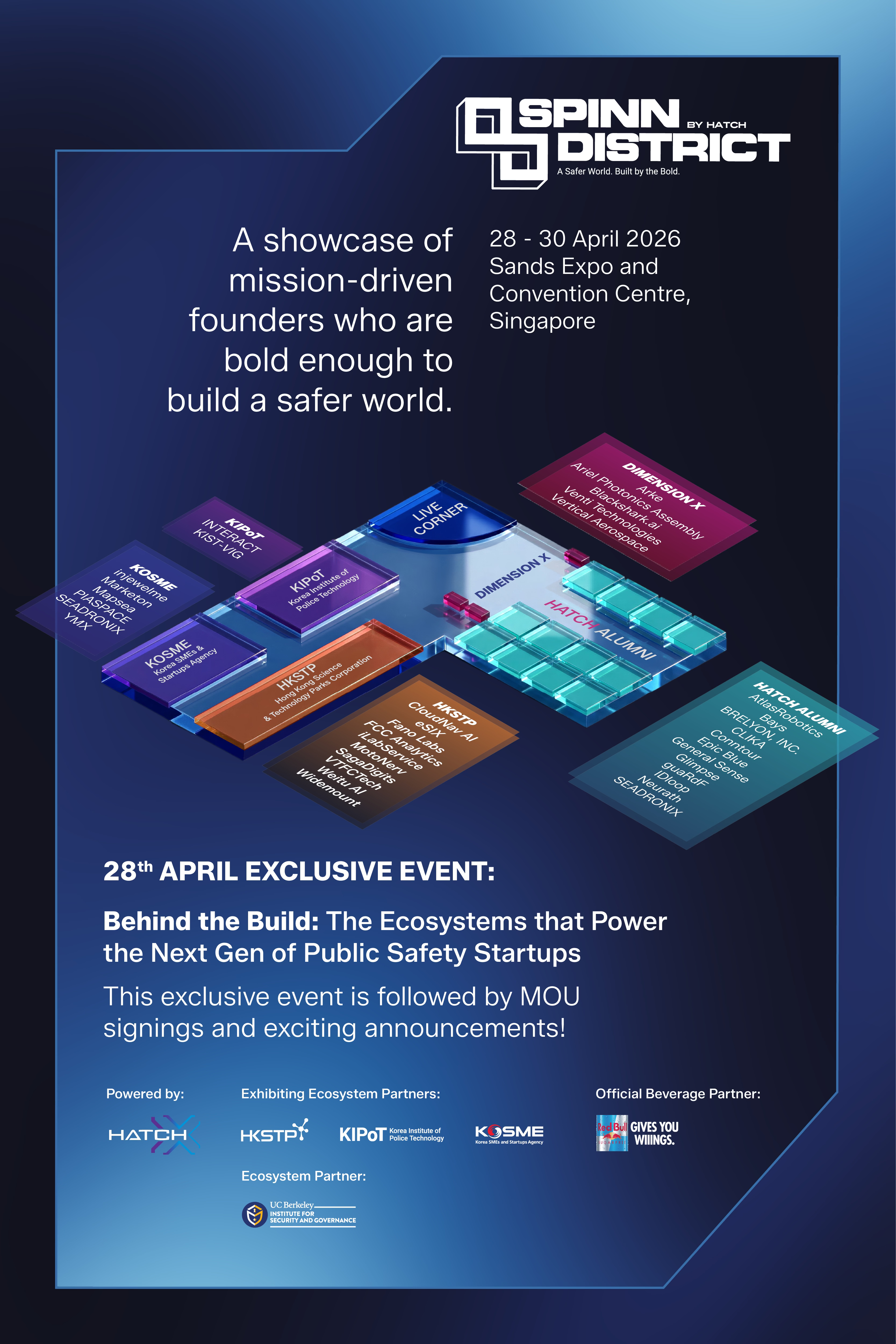
TechX Ventures announced multiple international agreements at the Milipol TechX Summit 2026 (MTX 2026), held April 28–30 at the Sands Expo & Convention Centre in Singapore, including a joint collaboration programme with the Korea Institute of Police Technology (KIPoT) and memorandums of understanding with the Korea SMEs and Startups Agency (KOSME), the Hong Kong Science and Technology Parks Corporation (HKSTP), and the UC Berkeley Institute for Security & Governance. The partnerships are aimed at strengthening cross-border cooperation in public safety innovation, startup development, and the deployment of AI-enabled security, policing, and emergency response technologies.
TechX Ventures, an arm of Singapore’s Home Team Science and Technology Agency (HTX) and a co-organizer of MTX 2026 alongside Civipol and Comexposium, played a central role in the event’s SPINN District under its Hatch programme.
💡The startup-focused zone brought together innovators from across Asia, including Hatch alumni and Dimension X participants, to showcase emerging public safety technologies and engage with government and industry stakeholders at one of Asia-Pacific’s largest security and public safety conferences.
Singapore
Featherless.ai has raised $20 million in a Series A round co-led by AMD Ventures and Airbus Ventures, with participation from BMW i Ventures, Kickstart Ventures, Panache Ventures and Wavemaker Ventures. The Singapore co-founded firm provides infrastructure for deploying open-source AI models and will use the funds to expand global capacity, launch a marketplace for specialised models and deepen integration across hardware platforms to lower inference costs.
💡The company supports more than 30,000 open models across language, vision and audio, positioning itself as a neutral layer independent of major cloud or hardware providers.
Thailand
Cube has raised $3.7 million in a Series A round led by Betatron Venture Partners, with participation from M Venture Partners and other investors. The Thailand-based firm said the funding will support investment in AI-enabled data enrichment technology, international expansion and growth with enterprise customers.
💡Founded in 2022, Cube provides digital commerce market data and insights, with operations across Southeast Asia and expansion into North Asia and Latin America.
Vietnam-Singapore
Authorities in Ho Chi Minh City have granted investment registration certificates for several projects, including two hyperscale data centers with a combined capital of nearly $1 billion, both involving Singapore-linked investors. The largest is Evolution DC VN HCMC, a $508.8 million facility with 52MW capacity focused on cloud computing, artificial intelligence and big data, backed by a consortium of Singapore firms Hathor, Frontier and Evolution.
💡A second hyperscale project, Starmason, carries $480.26 million in capital and a 60MW capacity, developed through a joint venture between Sembcorp Development and Vietnam’s BB Holdings.
Environmental Sustainability
Climate and environmental policy is increasingly being tied to financial instruments and infrastructure planning, with new mechanisms for carbon pricing, transition financing, and energy system development emerging across multiple markets. At the same time, there is ongoing tension between regulatory flexibility and the strength of environmental safeguards.
Australia
Green groups have accused the government of weakening proposed national environmental standards intended to protect threatened species and ecosystems under Australia’s nature law reforms. The draft standards, part of legislation passed in November, set out rules for developments affecting matters of national environmental significance, including endangered species, heritage areas and the Great Barrier Reef.
💡Under the revised draft, developers would be deemed compliant if they follow specified assessment processes or principles, rather than being required to demonstrate that environmental outcomes will be achieved. Conservation groups including the Wilderness Society and WWF-Australia said the changes shift the framework away from outcome-based protections recommended in the Samuel review, arguing they reduce enforceability and weaken safeguards for biodiversity.
Japan
Linkhola has launched a carbon credit methodology under its Earthstory platform to quantify emissions reductions from AI-controlled cooling systems. The approach allows energy savings from AI-optimised air conditioning in buildings to be measured and converted into tradable carbon credits, targeting a gap in voluntary carbon markets where software-driven efficiency gains have been difficult to standardise.
💡The methodology compares electricity use before and after AI deployment across building types, including offices and industrial facilities, and incorporates digital monitoring and verification tools. Linkhola said the framework is designed for global use, particularly in Asia where cooling demand is rising, and aims to align with emerging carbon market integrity standards as scrutiny of voluntary credits increases.
Malaysia
RHB Bank Berhad has signed an MOU with Petroliam Nasional Berhad to launch a sustainable vendor financing program (SVFP) under the Petronas Supplier Support Program. The initiative targets Malaysian oil and gas services and equipment vendors, particularly SMEs, to support adaptation to energy transition requirements while maintaining competitiveness and resilience, in line with the national energy transition roadmap.
💡The collaboration aims to enable a just and orderly transition by aligning financing with vendors’ capabilities, while supporting emissions reduction, energy security and long-term sector competitiveness.
Singapore
The Energy Market Authority has issued a request for proposal for a study on the feasibility of deploying geothermal energy systems in Singapore. The study will assess the technical, environmental and commercial viability of next-generation geothermal technologies as part of efforts to strengthen energy resilience and decarbonize the power sector.
💡The appointed consultant will identify potential sites, recommend policy frameworks and outline areas for further study, building on a nationwide geophysical survey launched in 2024. The work is intended to provide a basis for future decisions on geothermal deployment, with the consultant expected to be appointed in 2026.
UK-Asia
British International Investment has launched a $1.5 billion climate initiative for Asia under a new platform called British Climate Partners (BCP), aimed at accelerating emissions reductions in coal-reliant economies. The program will target markets including India, Indonesia, the Philippines and Vietnam, where energy transition financing needs remain substantial.
💡The initiative will mobilize private capital alongside BII through equity platforms and mezzanine financing to scale climate projects and reduce early-stage investment risk. BII said the effort is designed to crowd in commercial investors and expand climate finance deployment, with a broader strategy that increases its share of climate-related investments and focuses more heavily on frontier and high-impact markets.
Aviation
Aviation systems are being reshaped by a mix of operational pressures and regulatory change, with governments focusing on supply security, automation, and cross-border standardisation. At the same time, passenger rights and efficiency reforms are being tightened as airlines and regulators adapt to labour constraints and rising travel demand.
Australia
Australia has strengthened its fuel reserves amid global supply uncertainty, with Energy Minister Chris Bowen saying the country currently holds about 43 days of petrol, 33 days of diesel, and 28 days of jet fuel. He said 56 fuel shipments are en route and around 4 billion litres have been contracted for delivery, while Western Australia has separately secured 12 million litres of diesel for regional stockpiles in Wyndham, Kwinana, and Esperance.
💡Bowen said Australia is “very well placed” to manage near-term disruptions despite ongoing pressure on global supply chains linked to Middle East tensions and constrained shipping routes. Authorities are monitoring conditions under the National Fuel Security Plan, while aviation fuel tightness has already contributed to operational adjustments by airlines, including network changes and flight reductions in parts of the region.
Australia-China
China Petrochemical Corporation (Sinopec) has received clearance from the Australian Competition and Consumer Commission to acquire full ownership of China National Aviation Fuel Group Limited (CNAF). The regulator assessed the proposed transaction under Phase 1 and found that the acquisition is unlikely to substantially lessen competition in any market. According to the ACCC’s determination, the combined market share from the merger would be low, estimated at under ten percent.
💡The two state-owned Chinese companies overlap in jet fuel production and supply within Australia. However, the ACCC concluded that the merged entity would continue to face sufficient competition from other fuel suppliers operating in the country, including Ampol, Viva Energy, Caltex, and BP.
Japan
JAL Ground Service and GMO AI & Robotics Corporation will begin a demonstration experiment in May 2026 to test humanoid robots for airport ground handling operations. The project focuses on using human-shaped robots to operate within existing airport environments without major infrastructure changes, addressing labour shortages in baggage handling, cabin cleaning and ground support equipment operations.
💡The trial will proceed in phases, starting with workflow analysis at airports followed by simulated operational testing to assess safety and efficiency. The companies aim to evaluate whether humanoid robots can reduce workload and supplement human staff amid rising travel demand and a shrinking workforce, with GMO AI & Robotics providing robot systems and JAL Ground Service supplying operational capabilities and safety standards.
Mainland China-Hong Kong-Macao
The Civil Aviation Administration of China (CAAC), the Civil Aviation Department (CAD) of Hong Kong, and the Civil Aviation Authority of Macao (AACM) have signed four cooperation arrangements. The agreements cover mutual acceptance of type certificates, joint certification work for the C929 aircraft, joint maintenance management, and airworthiness oversight of aviation fuels and chemicals.
💡The framework expands existing mutual recognition mechanisms for airworthiness, maintenance, and training approvals, and extends cooperation to include aircraft type certification for conventional and unmanned systems. Authorities said the arrangements will also support continued joint certification work on the C929 programme, building on prior collaboration for the C919 aircraft.
New Zealand
New Zealand has launched a two-year programme to modernise its civil aviation rules, compressing 20 years of planned changes into a streamlined process, Associate Transport Minister James Meager announced. The initiative aims to remove growth barriers, enhance safety and security, and align domestic rules with international standards, including addressing issues raised in International Civil Aviation 💡Organization audits.
💡The 23-project programme includes better enabling agricultural drone use, modernising pilot training and licensing, updating security rules to reduce costs for regional airports, and recognising overseas approvals for aircraft maintenance providers. The New Zealand Airports Association backed the move, citing long-standing issues around runway safety and infrastructure investment
Thailand
Thailand’s Civil Aviation Authority and the Consumer Protection Board have agreed on stricter rules for flight cancellations, requiring airlines to notify passengers seven days in advance for international flights and three days for domestic flights, except in force majeure cases. Cash refunds must be processed within 14 days, credit card refunds within 45 days, and online travel agency refunds within 60 days; alternative travel or credit shells must be arranged within seven days of receiving documentation.
💡Airlines must also provide effective passenger contact channels, and travelers may seek compensation for consequential damages such as accommodation or car hire. Further discussions with carriers are set for May 5, to improve communication and complaint handling. Passengers can file complaints via CAAT’s website.
Advanced Air Mobility
Advanced air mobility is moving from demonstration to early infrastructure build-out, with China and other markets focusing on certification and aircraft development while India begins linking energy and transport networks for future air taxi operations. Use cases are also broadening into logistics and emergency services, suggesting parallel progress in both passenger and cargo applications.
China
EHang has completed the first people-carrying flights of its EH216-S pilotless eVTOL aircraft in Mexico and Latin America. The flights were conducted at Tulum International Airport by local operator Air Mobility during the Feria Aeroespacial México (FAMEX) Tulum Air Show 2026, demonstrating passenger-carrying operations in an airport environment.
💡The demonstrations build on earlier EH216-S trial flights in Mexico in 2025 under a Special Airworthiness Certificate issued by AFAC, which established a regulatory framework for uncrewed passenger operations. The latest flights support potential use cases including aerial tourism and airport shuttle services, and form part of ongoing efforts to advance certification and commercial deployment of the aircraft in Mexico.
China
Volant Aerotech has raised $300 million in a Series C funding round led by UAE-based Stone Venture, marking a record financing for a Chinese flying taxi developer. Shanghai-based Volant said the round also included participation from HongShan Capital Group, Fortera Capital, Future Capital, and Legend Capital.
💡The company said the funds will support airworthiness certification and mass production of its first commercial electric vertical take-off and landing (eVTOL) aircraft, the VE25-100, as well as development of next-generation platforms. Volant, founded in 2021, has now raised more than CNY4 billion ($586 million) across multiple funding rounds and reports over 1,900 preorders for the aircraft, including more than 500 overseas orders.
China
China’s HH-200 uncrewed transport aircraft completed its maiden flight on April 15 in Weinan, Shaanxi province, following a 22-minute test that met all planned objectives, according to state media reports and Aviation Industry Corporation of China (AVIC). Chief designer Dong Jianhong said the aircraft is a fully autonomous system rather than a remotely piloted platform, with its certification targeted for 2027 and potential entry into commercial service later that year.
The HH-200 features a cockpitless design with a maximum payload of 1.5 tonnes, up to 2,360 km range, and a cruising speed of 310 km/h. It is designed for cargo logistics applications including border and coastal transport, regional freight routes, and cross-border operations, with additional potential use cases in emergency response and remote sensing.
💡The aircraft incorporates autonomous navigation systems, multiple safety protocols, and emergency response functions intended to support operations in complex weather and operating environments.
India
India’s Jio-bp and VJaitra Air Mobility have signed a strategic memorandum of understanding (MoU) to develop a nationwide infrastructure network for electric and hydrogen-powered air taxis. The collaboration will focus on integrating charging and hydrogen refuelling systems across next-generation vertiports to support VJaitra’s planned eVTOL fleet on urban and intercity routes.
💡Under the agreement, Jio-bp will design and deploy charging infrastructure and develop aviation-grade green hydrogen production and distribution capabilities. The partners plan to establish vertiports at Jio-bp fuel station sites along highways and urban corridors, enabling passenger handling, aircraft charging and refuelling, and integration with road-based transport systems for multimodal mobility.
India-Malaysia
eVTOL developer Dragale Aviation has signed a memorandum of understanding (MoU) with Malaysia’s Aerospace Medical Concierge Alliance (A.M.C.A). The partnership aims to explore AAM applications in medical operations across Southeast Asia.
💡The collaboration will focus on developing eVTOL-based air medical networks, integrated aviation-enabled healthcare systems, and emergency response infrastructure.
Marine
Marine developments are increasingly centered on decarbonization, digitalization, and industrial consolidation, with green fuels, autonomous systems, and port investments advancing alongside state-led coordination in major shipbuilding economies. At the same time, regulatory enforcement in global shipping is intensifying amid post-pandemic contract disputes and capacity pressures.
Hong Kong-Mainland China
Venture Energy has signed a strategic memorandum of understanding with Shanghai Shenji Energy & Environmental Technology to expand cooperation from spot trading into a broader green marine fuel supply partnership. The agreement, signed in Shanghai, establishes a hybrid framework combining short-term market supply with longer-term offtake commitments.
The collaboration will focus initially on green methanol, with plans to scale procurement from 2026, alongside trial bunkering, trading platform development and vessel technical services. The companies said the partnership aims to improve access to low-carbon fuels for shipping customers as international maritime decarbonisation regulations tighten.
Singapore
Yangzijiang Maritime Development, listed in Singapore, has ordered 10 new vessels, expanding its forward fleet across both tanker and bulk carrier segments. The company said it has signed contracts with Chinese shipyards for four 114,000 dwt product/crude tankers, four 49,800 dwt product and chemical tankers, and two 40,000 dwt bulk carriers, with deliveries scheduled between 2027 and 2029.
The latest order brings its total fleet to 105 vessels, including 53 on order. The 49,800 dwt tankers will be methanol-ready and all ships will comply with EEDI Phase 3 requirements.
Singapore-China
PSA International has secured an investment in the Xiamen Container Terminal Group in China’s Fujian province, which operates eight container terminals with a combined annual capacity of about 20 million TEUs. The deal was awarded through a public bidding process and forms part of PSA’s continued expansion in the region.
The investment also includes additional funding in the Xiamen Port Intermodal Logistics Hub to strengthen port, supply chain and inland transport connectivity. PSA said the move reinforces its long-term presence in Fujian, alongside its existing operations in Xiamen and Fuzhou, and supports efforts to build more integrated logistics networks along China’s southeast coast.
South Korea
South Korea has launched a Shipbuilding-Shipping Mutual Development Strategy Council to better integrate its shipbuilding and shipping sectors under a unified national framework. The initiative, unveiled in Seoul on 28 April, brings together government ministries, major shipbuilders including HD Hyundai, Samsung Heavy Industries and Hanwha, as well as shipping companies such as HMM and Pan Ocean. It will operate under the W.A.V.E. strategy, which targets coordinated development across vessel technology, industry cooperation, fleet expansion, and ecosystem building.
💡As part of the launch, industry players signed a memorandum of understanding on LNG transportation cooperation, while the government announced a 600 billion won ($407 million) programme to develop AI-based autonomous vessel technology.
South Korea-Canada
South Korea’s Hanwha Group has signed a memorandum of understanding with Canada’s Automotive Parts Manufacturers’ Association (APMA), pledging to build armoured vehicles in Canada if it secures a multi-billion-dollar submarine contract with the federal government. The proposal is part of Hanwha’s broader bid to supply submarines and defence systems while expanding Canada’s domestic defence manufacturing capacity.
💡Under the agreement, Hanwha and APMA would establish a Canadian automotive defence unit to produce military vehicles, including infantry fighting vehicles and other armoured platforms, using local labour and supply chains. The company says the initiative could support major job creation and retool idle automotive plants, positioning Canadian production as central to its industrial strategy alongside competitors in the submarine procurement process.
UK-South Korea
Orca AI has entered a strategic partnership with South Korea’s Samsung Heavy Industries (SHI) to deploy autonomous vessel technologies across newbuilds and retrofit projects. Under the agreement, SHI will integrate Orca AI’s situational awareness platform into vessels using its Samsung Autonomous Ship (SAS) system, while Orca AI will incorporate SHI technologies including SVISION berthing assistance and autonomous speed control into its platform. The companies will jointly develop integrated solutions for navigation, berthing, and speed optimisation.
💡The collaboration also includes joint research and operational data sharing to improve real-time navigation, decision-making, and fuel efficiency.
USA-Hong Kong
A US administrative law judge has ordered Orient Overseas Container Line (OOCL) to pay $45.6 million in reparations to the bankruptcy estate of Bed Bath & Beyond, in a ruling that found the carrier violated provisions of the US Shipping Act during the Covid-era freight market disruption. The decision concluded that OOCL failed to meet contracted space commitments and engaged in retaliatory conduct after disputes arose over service performance.
The ruling found that OOCL, a Hong Kong subsidiary of COSCO Shipping Holdings, provided lower-than-contracted capacity during 2020–2022, when global shipping demand surged and spot rates increased significantly. The judge determined the carrier did not make sufficient efforts to meet its contractual obligations, while rejecting portions of the $165 million claim submitted by the bankruptcy estate.
💡The decision, which remains subject to review by the Federal Maritime Commission, is the largest reparations award issued by the agency to date.
Space
Space activity is increasingly split between scaling industrial launch capacity, advancing Earth observation capabilities, and developing life-support technologies for long-duration missions. Public-private partnerships and international collaboration remain central, particularly in Earth monitoring and early-stage experimentation for space habitation systems.
Australia
Industry representatives have called for an overhaul of the Australian Space Agency rather than further funding cuts, amid concerns over a potential 70% cumulative reduction in its budget ahead of Federal Budget 2026. The Space Industry Association of Australia said the agency remains central to developing the country’s space sector, which is estimated to employ tens of thousands of people and generate billions in annual turnover.
💡Industry figures argue the agency has supported early-stage projects and helped establish Australia’s credibility in the global space market, but say its coordination role across government could be strengthened. Some companies have raised concerns about limited direct support, while others point to its role in enabling launch approvals and regulatory progress for emerging firms such as Gilmour Space Technologies.
Australia
Aexa Aerospace and SpacePort Australia have formed a joint venture called the Hamilton Project to develop and train a medical artificial intelligence system designed for use in spacecraft and space station environments. The initiative aims to support diagnosis and treatment of crew members operating in resource-limited conditions, including future deep-space missions and space tourism.
💡The project combines Aexa Aerospace’s holographic medical systems, which have been tested aboard the International Space Station, with SpacePort Australia’s clinical and rural healthcare capabilities. The partners say the system will draw on remote medicine practices to build an AI model capable of assisting autonomous medical decision-making in space and other isolated environments.
China
Chinese private aerospace company CAS Space Co has completed a “super factory” in Shaoxing, Zhejiang Province,designed to produce up to 12 Kinetica-2 liquid-propellant rockets annually at full capacity. The facility integrates assembly, testing and core component manufacturing, including propellant tanks, valves and structural sections, and follows the rocket’s successful maiden flight on March 30 carrying multiple payloads into orbit.
💡The company said the plant uses modular design and parallel assembly lines to shorten production cycles and increase launch flexibility, with full capacity expected within three to five years.
India-USA
Indian space-tech startup GalaxEye has launched “Drishti,” a satellite it describes as the world’s first OptoSAR system combining optical and radar imaging to capture high-resolution Earth observation data in real time regardless of weather conditions. The 190 kg satellite was launched aboard SpaceX’s Falcon-9 rocket from Vandenberg Space Force Base in the United States as part of the CAS500-2 mission.
💡The Bengaluru-based firm said Drishti integrates synthetic aperture radar with optical sensors to enable simultaneous imaging of the same location, aimed at improving accuracy over traditional dual-satellite approaches. The satellite is designed for applications including defence, agriculture, disaster response, maritime monitoring and infrastructure planning.
Japan
DASSAI Inc. and Mitsubishi Heavy Industries have completed the first mission of the “DASSAI MOON Project,” aimed at testing sake production under lunar-gravity conditions. Brewing equipment and raw materials were sent to the International Space Station and used in experiments aboard the Japanese “Kibo” module under simulated lunar gravity, where fermentation was successfully confirmed.
💡The mash was later returned to Earth and refined into sake at DASSAI’s brewery, producing about 116ml of finished product, including a limited titanium-bottled edition. The companies said the results show alcohol fermentation is feasible in reduced gravity, while also indicating slower fermentation rates compared with Earth, as part of broader research into future space-based food production systems.
USA-India
A new analysis from the NISAR mission has mapped ground subsidence in Mexico City, showing parts of the capital sinking by more than 2 centimetres per month. The satellite, jointly developed by India and the United States, uses dual-frequency radar to track subtle changes in Earth’s surface through clouds and vegetation.
💡Mexico City, home to around 20 million people and built on a depleted aquifer, has long experienced land subsidence driven by groundwater extraction and urban weight. The latest data highlights areas of rapid sinking across the city, including zones near key infrastructure such as the airport.
**Nothing in this article is intended to be or should be construed as legal or financial advice.**