
Asset Finance & Alternatives in APAC & Beyond
Aviation Finance, Alt Asset Finance in APAC & Beyond

Your exclusive gateway to the latest developments across transportation and space, and most importantly, how to finance it all - debt, equity, and defi! We follow and forecast where the money’s at.
Join us as we navigate through the latest roundup to uncover key developments across the region.
**Nothing in this article is intended to be or should be construed as legal or financial advice.**
Summary
Financing & Investments: KKR Backs Ampol Refinancing; Iluvatar CoreX Raises $907 Million; IFC Funds Johor Data Centers; CapBay Launches MYR 200 Million Pool; Atome Secures $81 Million Facility; pQCee Raises Quantum Security Funding; Crypto.com Lands $400 Million Investment; Whale Extends Series C Round; and VAMRC Drives Manufacturing Innovation
Environmental Sustainability: China Launches Marine Climate Research Platform; HSBC Backs Nature Impact Accelerator; Hong Kong Opens EV Battery Recycling Plant; Winnow Expands Food Waste Technology; Malaysia Opens Solar Storage Tender; Rize Raises $31 Million For AgriTech; and South Korea Reviews Nuclear Expansion
Aviation: Air Cambodia Orders 20 C909 Regional Jets; C919 Begins First International Service; JAL Strengthens Alcohol Safety Controls; ANA Opens Disaster Backup Facility; Incheon Airport Reviews Queue Measures; and Thailand Pursues Airport Digital Transformation
Advanced Air Mobility: FCourier Deploys VTOL Drones For Relief; AAM Shanghai Showcases Industry Growth; SkyDrive Tests eVTOL Tourism Flights; South Korea Builds AAM Ecosystem; Korean Air Advances AI Aviation; South Korea Prepares UAM Demonstration; Sri Lanka Plans AAM Pilot; and Taiwan-Japan Expand Drone Cooperation
Marine: RMIT Develops Oil Spill Cleanup Robot; Hong Kong Expands Green Fuel Bunkering; Kawasaki Builds AI Digital Shipyard; Hyundai Tests Autonomous Ship Robot; HD Hyundai Launches AI Route Optimization; and South Korea-Indonesia Boost Marine Cooperation
Space: Australia Supports India Space Missions; China Expands Commercial Space Network; Skyroot Launches Private Indian Rocket; ISRO Advances Gaganyaan Testing; and India Plans More Space Missions
Financing & Investments
APAC financing activity is increasingly focused on strategic growth areas including digital infrastructure, artificial intelligence, fintech, cybersecurity and advanced manufacturing, with investors backing companies and projects that support regional technology adoption and long-term economic transformation.
Australia
KKR has provided a cornerstone investment in a A$400 million ($275 million) financing facility for Australian fuel retailer Ampol, with funding from its private credit and insurance platforms. The financing will support Ampol’s refinancing activities and general corporate purposes.
💡Ampol operates fuel supply, refining and retail businesses in Australia and New Zealand, including the Lytton refinery in Queensland and about 2,200 retail sites across both markets. The investment was supported by Singapore-based Clifford Capital, as KKR expands its private credit activities in the Asia-Pacific region.
Hong Kong
Shanghai Iluvatar CoreX Semiconductor has raised about HKD 7.07 billion ($907 million) through an H-share placing in Hong Kong, marking the largest such placing in the city’s semiconductor sector since 2026, according to a statement from Kirkland & Ellis, which advised the company.
💡The semiconductor company plans to use the proceeds to strengthen supply chain capabilities, advance research and development, expand artificial intelligence computing solutions, pursue investments and acquisitions, and support general corporate purposes. Goldman Sachs, Morgan Stanley, Huatai International and J.P. Morgan acted as placing agents.
Malaysia
The International Finance Corporation (IFC) will provide up to $175 million in financing for AirTrunk Malaysia’s development of two hyperscale data centers in Johor Bahru, Malaysia. The investment, comprising debt and equity financing, is pending final signing after approval by the IFC board.
💡The project includes an existing 150MW facility and a planned 270MW data center within the Southern Industrial and Logistics Cluster in Iskandar, Johor. The facilities will be powered by Tenaga Nasional Berhad and are expected to support Malaysia’s data hosting sector and create employment opportunities during construction and operations.
Malaysia
Malaysian fintech firm CapBay has partnered with the Malaysia Digital Economy Corporation (MDEC) to provide growth financing for Malaysia Digital (MD) Status technology companies through a MYR 200 million ($49 million) financing pool. The MD Technology Financing Program will offer eligible companies access to financing of up to MYR 3 million, with repayment periods of up to 60 months.
💡The program targets technology companies that may struggle to secure traditional loans due to asset-light business models, using CapBay’s AI-based credit assessment model to evaluate business performance and growth potential. CapBay said it has facilitated more than MYR 5.6 billion in financing for over 2,600 enterprises since 2016.
Philippines
Atome Philippines has secured a PHP5 billion ($81 million) wholesale financing facility from Asia United Bank to support the expansion of its PayLater Anywhere Card and other financial services. The Singapore-headquartered digital finance platform said the card has been issued to more than 3 million users in the Philippines.
💡Atome said a majority of cardholders use the product for daily expenses including groceries, food, household purchases and bill payments, with adoption extending beyond Metro Manila. The company also offers lending, savings and insurance products in the Philippines as it expands services for customers underserved by traditional banks.
Singapore
Singapore-based post-quantum cryptography company pQCee has raised $3.9 million in a seed funding round co-led by SGInnovate and Lotus One Investment, with participation from In Group Holdings, Wavemaker Ventures, SUTD Venture Holdings and Apsara Investments. The funding follows the company’s $2.8 million institutional round and will be used to expand its Singapore team, strengthen its presence across Asia and support expansion into the United States, Europe and the Middle East.
💡pQCee develops post-quantum cryptography products designed to protect against “harvest now, decrypt later” attacks, in which encrypted data is collected for future decryption using quantum computers. The company has integration partnerships with Thales, Feitian, Netrust, SendQuick, PQShield, Microsoft and TechCreate to support deployment of its quantum-safe security products across enterprise and hardware security environments.
Singapore
Crypto.com has secured a $400 million strategic investment from Citadel Securities in its first institutional funding round, valuing the cryptocurrency platform at $20 billion. The company said the capital will support its expansion across asset classes, including tokenized securities and derivatives, as it broadens its presence in both digital asset and traditional financial markets.
💡The investment comes as institutional participation in the crypto sector continues to grow, with digital assets increasingly integrated into capital market infrastructure.
Singapore
Whale secured a $40 million extension to its Series C funding round, taking the total raised in the round to $100 million. The Singapore-based enterprise AI firm said the capital will fund expansion in North America, the Middle East and Europe.
💡CMB International and SMBC Asia Rising Fund led the financing, with Krungsri Finnovate, Singtel Innov8, Hyundai Motor Group and Charisma Partners also investing. Whale develops AI software that helps businesses monitor and automate operations using data collected from connected devices, and said it serves more than 1,600 enterprise customers in over 45 countries.
Vietnam-Singapore
Vietnam and Singapore are developing the Vietnam Advanced Manufacturing Research Center (VAMRC) to support automation, robotics, artificial intelligence and digital transformation in manufacturing. The initiative follows a cooperation agreement between Vietnam’s Becamex and Singapore’s Agency for Science, Technology and Research (A*STAR).
💡The proposed center will link companies, universities and research organizations to develop, test and validate manufacturing technologies before deployment. It will provide shared facilities for research, prototyping and technology trials, while helping factories upgrade processes without replacing entire production lines.
Environmental Sustainability
China, Hong Kong, Malaysia, Singapore and South Korea are advancing sustainability initiatives across marine research, circular economy, renewable energy, agriculture and clean technology, highlighting a regional focus on climate resilience, resource efficiency and low-carbon infrastructure development.
China
China has commissioned an offshore platform in the Yellow Sea designed for controlled experiments on coastal ecosystems, as researchers seek to study marine responses to climate change and human activity under real ocean conditions. The facility, developed by the Institute of Oceanology under the Chinese Academy of Sciences, is located off Rongcheng in Shandong province.
💡The 2,000-square-meter platform can regulate factors including temperature, nutrients and dissolved oxygen to simulate conditions such as ocean warming, acidification and eutrophication. Researchers said the open-access facility will support studies on coastal resilience, aquaculture management, disaster prevention and ecosystem restoration.
Global
Companies Creating Change (C3) and HSBC have launched the C3 Nature Impact Accelerator to support ecosystem restoration and nature-based initiatives across the Middle East, North Africa, Türkiye and Southeast Asia. The 10-week programme will provide training, expert support and partnership opportunities for selected projects focused on environmental restoration and community resilience.
💡The accelerator will support an initial cohort of 20 initiatives, with 10 to 12 projects advancing to a second phase of tailored coaching. The programme will focus on dryland and desert restoration, urban nature and heat resilience, and wetlands and freshwater ecosystem restoration.
Hong Kong-Mainland China
Hong Kong has commissioned its first electric vehicle (EV) battery processing plant at EcoPark in Tuen Mun, operated by Envision Greenwise Holdings and its subsidiary Chun Yang International. The facility is designed to process 10,000 tonnes of retired EV batteries annually, converting them into reusable materials through automated recycling technology.
💡The plant will support Hong Kong’s battery recycling infrastructure and the development of a regional circular supply chain. Envision Greenwise also formed a joint venture with China Resources Recycling International Development and Guangdong Brunp Recycling Technology, while signing an agreement with CLP Power to study the recovery and use of residual energy from retired batteries.
London-Singapore
Winnow, a London-headquartered food waste technology company, acquired Singapore’s Lumitics, expanding its presence in Asia-Pacific and the Middle East. Terms of the deal were not disclosed.
💡Lumitics develops computer vision-based systems that track food waste in commercial kitchens using hardware and software. Its customers will transition to Winnow’s VisionAI platform, which uses artificial intelligence to identify and measure discarded food, while service continues during the migration. Winnow operates in more than 3,500 kitchens across nearly 100 countries.
Malaysia
Malaysia’s energy ministry has opened a new tender for 2,500MW of solar projects combined with 1,250MW of battery storage capacity as the country expands renewable energy generation. The sixth round of the Large-Scale Solar programme also includes a separate 150MW allocation for Bumiputera developers.
💡The programme will be split across three packages covering utility-scale solar and battery storage projects, with selected developments expected to begin operations by the end of 2029. The government estimates the initiative will draw MYR 13 billion to MYR 15 billion ($3.2 billion-$3.7 billion) in investment and cut annual carbon emissions by about 2.6 million tonnes.
Singapore
Agricultural technology company Rize has raised $31 million in a Series B round, comprising $20 million in equity and $11 million in debt financing. The funding brings Rize’s total capital raised to $47 million and will support expansion into export markets, development of AI tools for farmers and field teams, and carbon-related initiatives.
💡The company works with about 17,000 smallholder farmers across more than 50,000 hectares in Vietnam and Indonesia to reduce emissions from rice cultivation using water management techniques. Rize said its approach can lower methane emissions and water use while improving farmer income, and it has completed initial rice exports to markets including Europe, Canada, Australia and Singapore.
South Korea
South Korea is reviewing plans to expand nuclear power generation and introduce small modular reactors (SMRs) to meet rising electricity demand from major industrial projects, including planned semiconductor clusters and artificial intelligence data centers. The government estimates additional power demand could exceed 50 gigawatts by 2040 due to industrial expansion, transport electrification and heating needs.
💡The review will be reflected in the country’s next electricity supply and demand plan, alongside a push to increase renewable energy capacity to 100GW by 2030. Meanwhile, 136 civic organizations have called for a reconsideration of the projects, saying the planned developments could undermine climate goals, damage ecosystems and proceed without sufficient public consultation.
Aviation
China is advancing its aviation ambitions through COMAC aircraft expansion and new international routes; Japan, South Korea and Thailand focus on airline safety, operational continuity and airport modernization initiatives.
Cambodia-China
Air Cambodia has agreed to purchase 20 C909 regional jets from China’s Commercial Aircraft Corporation of China (COMAC), making it the first foreign flag carrier to place a bulk order for the aircraft. The first deliveries are expected in the second half of 2026 and will enter commercial service with the airline.
💡The C909, formerly known as the ARJ21, seats up to 97 passengers and is designed for regional routes and airports with challenging operating conditions. The aircraft currently operates in markets including Indonesia, Laos and Vietnam, serving 28 overseas cities, according to COMAC.
China-Mongolia
China’s C919 passenger jet will begin its first scheduled international service next month, with Air China operating flights between Beijing and Ulaanbaatar, Mongolia. The daily round-trip route is scheduled to begin on Aug. 12, marking the aircraft’s first regular international passenger operation.
💡The domestically developed narrowbody aircraft has previously operated regional routes, including services between mainland China and Hong Kong. The Beijing-Ulaanbaatar route will be operated by Air China, which will fly the C919 alongside existing operators including China Eastern Airlines.
Japan
Japan Airlines (JAL) has submitted a report to Japan’s transport ministry on measures to prevent further alcohol-related safety incidents after receiving an administrative warning linked to a May 2026 incident involving two cabin attendants.The ministry said the incident exposed failures in alcohol testing procedures, safety management and employees’ compliance awareness.
💡JAL said it will strengthen oversight of alcohol-related risks through external reviews and updated monitoring systems. The airline has faced multiple alcohol-related incidents since 2024, including cases involving cockpit crew in Dallas, Melbourne and Honolulu, which led to regulatory actions and additional corrective measures.
Japan
All Nippon Airways (ANA) has opened a new flight operations facility in Hokkaido to maintain airline functions during major disasters or security emergencies. The facility will take over part of the operations previously concentrated at Tokyo’s Haneda Airport.
💡The site has about 60 employees responsible for functions including flight management, crew coordination and aircraft operation decisions during disruptions. ANA said the move is part of efforts to strengthen business continuity against risks such as major earthquakes, volcanic eruptions and terrorist attacks.
South Korea
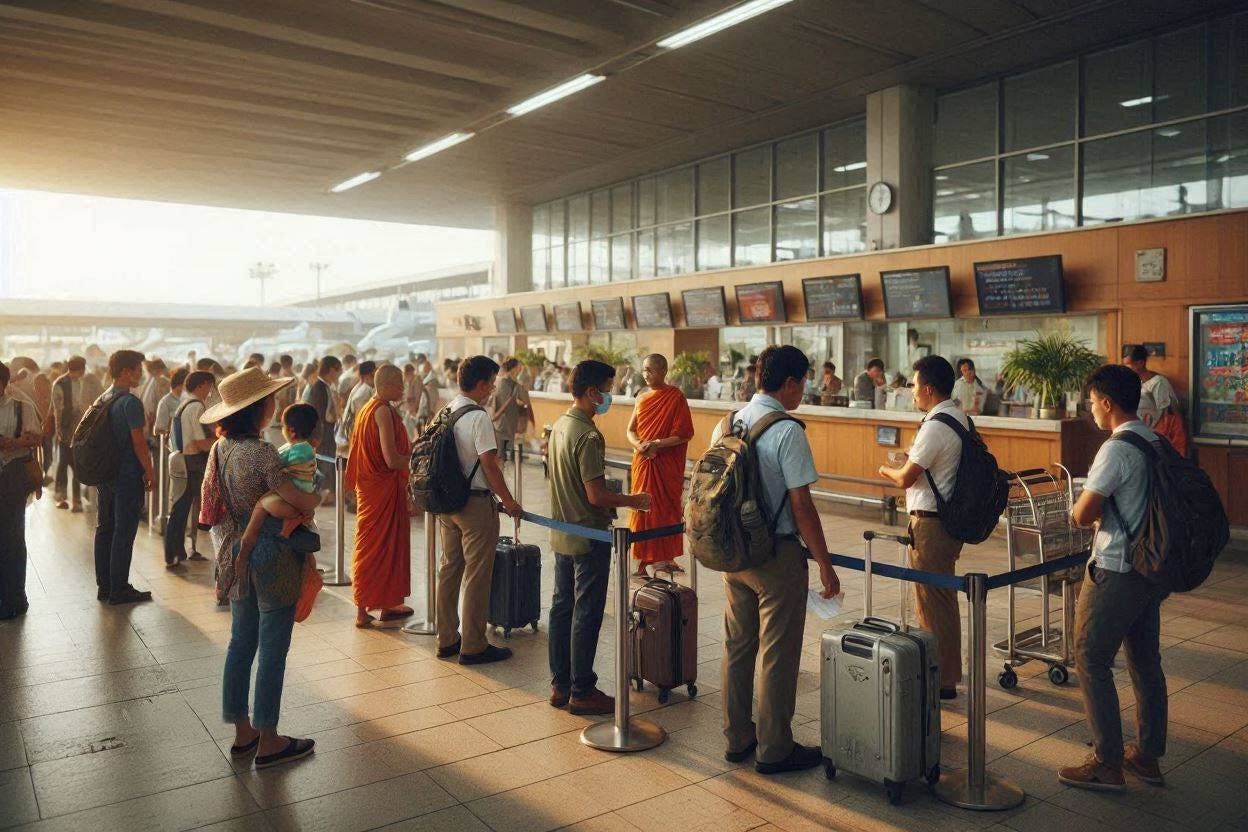
Incheon International Airport is considering adding barriers at airline check-in areas after repeated queue-jumping incidents involving suspected Chinese daigou traders, which resulted in injuries to airport staff, local media reported. The incidents involved passengers bypassing designated lines to reach check-in counters for China-bound flights.
💡The airport is reviewing measures including installing plastic partitions between existing queue barriers to improve crowd control. Authorities said congestion has increased on some China routes as airlines deploy larger aircraft, while tighter enforcement in China has temporarily reduced the number of daigou traders traveling from South Korea.
Thailand, UAE, Spain
Thai Aviation Industries (TAI), UAE-based Edgewater Solutions Limited and Spain’s Amadeus have signed a memorandum of understanding to develop a roadmap for modernizing passenger processing and airport operations at Thailand’s international and regional airports. The companies will define the scope, implementation phases and technical requirements for potential deployments, with no financial terms disclosed.
💡The roadmap will cover passenger processing, identity and border management, airport operations and data integration. Proposed technologies include self-service check-in, automated baggage handling, biometric processing, e-gates, operational databases, resource management systems and analytics linking passenger and operational data.
Advanced Air Mobility
Developments in China, Japan, South Korea, Sri Lanka and Taiwan highlight continued investment in drones and eVTOL technologies, with efforts centered on testing, regulation, infrastructure and future commercialization.
China
Vertaxi subsidiary FCourier deployed its type-certified E40H hybrid-electric VTOL UAVs to support flood relief operations in Guangxi and Fujian, using the aircraft as airborne communication platforms after severe weather disrupted power, roads and mobile networks. The company said five E40H systems operated in Guangxi, providing emergency communications coverage, reconnaissance support and connectivity for affected communities.
💡The UAVs completed multiple missions supporting disaster response, with the E40H providing mobile network coverage through an onboard base station while transmitting aerial data to emergency teams. FCourier said the platform, which holds certification from China’s aviation regulator, has also been used in previous emergency response and infrastructure monitoring operations.
China
The 2026 International Low-Altitude Economy Expo (AAM Shanghai) will be held from July 22 to July 25 in Shanghai,bringing together more than 400 companies focused on advanced air mobility, eVTOL aircraft, drones and related technologies. The event will feature full-scale aircraft displays, low-altitude infrastructure systems, airspace management solutions and industrial drone applications.
💡Exhibitors include eVTOL developers, UAV manufacturers, aerospace companies and technology suppliers from China and abroad. The expo will highlight uses including emergency response, logistics, urban air mobility and low-altitude operations, with industry forums and flight demonstrations scheduled during the event.
Japan
SkyDrive has completed a demonstration flight of its electric vertical takeoff and landing (eVTOL) aircraft in Yamaguchi Prefecture, simulating future scenic tourism flights over the Seto Inland Sea. The remotely operated flight was conducted without passengers and covered about 2 km at a maximum speed of 86 km per hour.
💡The demonstration tested operational processes for future eVTOL tourism services, including passenger transfers from ground transport to takeoff facilities. SkyDrive is developing the aircraft for commercial service targeted from 2028 and has previously conducted test flights at locations including the Osaka Expo site and Tokyo Big Sight.
South Korea
Skyports Infrastructure, UI Helicopter and BETA Technologies have signed a memorandum of understanding to develop the infrastructure and services needed for South Korea’s commercial advanced air mobility (AAM) operations, targeting a 2029 launch. The partnership brings together vertiport infrastructure, aircraft operations and electric aircraft manufacturing capabilities.
💡Under the agreement, UI Helicopter plans to acquire up to 20 BETA electric aircraft, including vertical takeoff and landing and conventional takeoff and landing models, with deliveries expected from 2029. Skyports will support vertiport development and charging infrastructure deployment, including a planned network on Jeju Island.
South Korea
Korean Air showcased its artificial intelligence pilot system and advanced air mobility technologies at the Korea Drone & Urban Air Mobility Expo in Incheon, highlighting autonomous flight, traffic management and digital aircraft maintenance capabilities. The airline presented its AI Pilot system for future unmanned aircraft and ACROSS, a platform designed to monitor multiple advanced air mobility vehicles and optimize flight operations.
💡The carrier also displayed uncrewed aircraft platforms, a collaborative combat aircraft and an AI-based maintenance system that uses drones, ground robots and image analysis to identify aircraft defects. Korean Air said the technologies are part of efforts to advance digital transformation in aerospace, though autonomous aviation development continues to face regulatory, infrastructure and public acceptance challenges.
South Korea
South Korea’s Ministry of Land, Infrastructure and Transport has established a pilot operation model for the country’s first Urban Air Mobility (UAM) demonstration service planned for 2028, defining requirements for operations, aircraft, personnel, vertiports, air traffic management and insurance. The framework will initially allow tourism, regional-link and airport-link services in designated demonstration zones under controlled operating conditions.
💡The ministry will also begin a program to train UAM pilots and mechanics with the Korea Transportation Safety Authority to prepare for future commercialization. Selected trainees will receive support for specialized programs with global aircraft manufacturers and qualification programs.
Sri Lanka
Sri Lanka’s Civil Aviation Authority is preparing a pilot project to introduce passenger-carrying electric aerial vehicles as part of efforts to develop AAM services. The authority said it has completed initial project phases and is finalizing preparations for a demonstration focused on operational, regulatory and safety requirements.
💡The pilot will evaluate piloted electric aircraft capable of carrying up to six passengers for uses including transport, cargo delivery, medical services and access to remote areas. Sri Lanka is developing local regulations for advanced air mobility systems and plans to work with private-sector partners, with initial aircraft expected to be sourced from Thailand under the EHang brand.
Taiwan-Japan
Taiwan and Japan signed three agreements to expand cooperation in advanced air mobility and drone applications, including eVTOL aircraft for emergency medical transport, large cargo drones and training drones. The partnerships involve Taiwanese drone maker 7A Drones, the Industrial Technology Research Institute, Japanese eVTOL company SkyDrive, logistics drone firm AlterSky and AeroJapan.
💡The agreements aim to advance demonstrations and commercial deployment in Japan, including planned medical transport trials for Taiwan’s outlying islands, cargo drone applications and wildlife management solutions. Taiwan’s Ministry of Economic Affairs said the collaborations will support overseas expansion of local drone technologies, including flight control systems, aircraft integration and related services.
Marine
Marine innovation is advancing through cleaner fuels, AI-driven ship operations and automation, with Australia, Hong Kong, Japan, South Korea and Indonesia focusing on technologies that improve sustainability, efficiency and resilience in maritime industries.
Australia
Researchers at Australia’s RMIT University are testing a compact robot designed to remove oil from contaminated seawater without using chemical dispersants. The “Electronic Dolphin” uses a water-repelling, oil-attracting filter and onboard pump to collect oil into a storage chamber, with researchers reporting the prototype achieved up to 97% removal efficiency in testing.
💡The robot is designed to operate as part of a fleet of small units that can be deployed across spill areas and recover oil for potential reuse. Researchers are continuing development to improve battery life, storage capacity and filter size before the technology can be considered for large-scale oil spill response.
Hong Kong
Hong Kong has completed its largest green methanol bunkering operation, with 1,000 tonnes of alternative fuel supplied to a Roll-on/Roll-off vessel operated by China Merchants Shenzhen Shipping. The operation used the bunker barge Da Qing 268 and involved Venture Energy, Sinopec (Hong Kong) and Shanghai Shenji Energy.
💡The deployment marks an expansion of green fuel infrastructure in the Greater Bay Area, supporting efforts to develop lower-carbon maritime operations.
Japan-USA
Kawasaki Heavy Industries and NVIDIA have begun a collaboration to develop a next-generation digital shipyard using physical AI and digital twin technologies at Kawasaki’s Sakaide Works in Japan. The project will combine Kawasaki’s shipbuilding data and robotics capabilities with NVIDIA’s AI, simulation and robotics platforms to improve vessel design and construction processes.
💡The companies will focus on AI-enabled robotics, digital twins, process optimization and lifecycle data management for commercial vessels. The initiative aims to address labor shortages in Japan’s shipbuilding sector, increase production efficiency and support future vessel construction, maintenance and operations.
South Korea
Hyundai Motor and Kia’s MobED mobile robot platform has completed an autonomous driving demonstration aboard a working vessel, marking the first such trial conducted on a ship. The test was carried out with Korean Register, HMM, HMM Ocean Service and Goseong Engineering aboard HMM’s multipurpose vessel Hyundai Dubai.
💡The demonstration evaluated whether a land-based autonomous robot could operate in a moving maritime environment, including cargo areas and narrow passageways. MobED successfully performed autonomous navigation tasks in cargo spaces, with further development needed for tighter areas such as engine rooms and confined corridors.
South Korea
Weathernews and HD Hyundai Marine Solution have signed a framework agreement to commercialize and expand deployment of OSR-OW, an AI-based ship route optimization solution. The system combines Weathernews’ weather forecasting and route planning technology with HD Hyundai Marine Solution’s AI vessel performance modeling capabilities.
💡Trials of OSR-OW showed fuel savings of at least 3%, according to the companies. The partners plan to pursue commercial contracts with shipping operators, expand global marketing and deploy the solution across their existing customer base of about 8,000 vessels without requiring additional onboard equipment or software.
South Korea-Indonesia
South Korea and Indonesia will expand cooperation in the marine plant industry through projects focused on resource recycling, carbon reduction technologies and workforce development. Under an implementation agreement, South Korea will lead a demonstration project to convert decommissioned Indonesian marine plants into liquefied natural gas supply facilities, supported by 35 billion won in government funding through 2028.
💡The two countries will also develop training programs for Indonesia’s eco-friendly marine plant service sector, with 4.36 billion won allocated through 2029 under official development assistance projects.
Space
Space activity is advancing across China and India, with developments spanning commercial launch capabilities, human spaceflight preparations, mission support infrastructure and the expansion of private sector participation.
Australia-India
Australia has commissioned a temporary space tracking terminal in the Cocos (Keeling) Islands to support India’s Gaganyaan human spaceflight program. The facility, coordinated by the Australian Space Agency with support from government partners and space company Nova Systems, will provide tracking assistance for four planned ISRO missions, including an upcoming uncrewed test flight.
💡The terminal is part of broader Australia-India space cooperation and highlights Australia’s role in providing mission support infrastructure in the Indo-Pacific region. The tracking system will help monitor spacecraft operations during the Gaganyaan program as India prepares for human spaceflight activities.
China
China has published a national commercial space consortium membership list covering 271 entities across launch services, satellite development, ground systems, data applications, technology innovation and finance. The list, released by a center under the State Administration of Science, Technology and Industry for National Defense, provides insight into companies and sectors receiving recognition within China’s commercial space ecosystem.
💡Members include established launch providers, satellite companies and emerging space firms involved in areas such as direct-to-device connectivity, commercial human spaceflight, orbital computing and reusable spacecraft. The consortium, established in 2025 under the China National Space Administration, is intended to support industry coordination, standards development and cooperation across the commercial space sector.
India
Skyroot Aerospace became the first Indian private company to place a rocket into orbit after its Vikram-1 vehicle completed an inaugural orbital launch from India’s spaceport in Sriharikota. The small-lift rocket reached low Earth orbit during a test mission carrying six payloads, including scientific instruments, satellites and demonstration items.
💡The launch advances Skyroot’s plan to provide dedicated small-satellite missions through a commercial service model aimed at reducing waiting times for orbital access. The company, which is developing rockets for global customers, said it plans additional test flights before beginning commercial operations.
India
India’s space agency ISRO has completed three major qualification tests for crew module systems of the Gaganyaan human spaceflight mission, covering flotation, module separation and structural loads. The tests evaluated the Crew Module Up-righting System, the Crew Module-Service Module Connect Disconnect System and the structure’s ability to withstand apex cover separation forces.
💡ISRO said the tests validated key safety and performance requirements, including post-splashdown flotation deployment, clean separation of crew and service module interfaces, and structural integrity during parachute cover separation. The results support further preparations for the crewed mission.
India
ISRO Chairman V. Narayanan said the agency plans at least seven launches during the 2026-27 financial year, with the next mission expected within two months. The planned missions include the first uncrewed test flight of the Gaganyaan human spaceflight program and multiple satellite launches.
💡Narayanan also said ISRO aims to commission its second launch complex at Kulasekarapattinam in Tamil Nadu within six months to support small satellite missions. He noted the growth of India’s private space sector since the 2020 reforms, with more than 400 space startups now operating compared with one at the time of the policy changes.
**Nothing in this article is intended to be or should be construed as legal or financial advice.**